B2C Platform · Video Streaming · Creator Economy · Web & Mobile

Creator-focused video streaming platform for web and mobile

Webka was a B2C video streaming platform for creators and audiences — combining elements of YouTube, Instagram Live, and Twitch. It allowed streamers, educators, coaches, trainers, influencers, and other creators to host live broadcasts, interact with viewers, manage content, and monetize their expertise.

When I joined, the product already existed as an MVP. My work focused on developing the platform further: improving key creator and viewer flows, researching user needs, designing new scenarios for web and mobile, and helping the team move from an MVP toward a more structured product experience.

Role
Product Designer
Domain
B2C Video Streaming / Creator Economy
Platform
Web & Mobile
Team
4 designers, PMs, developers, QA, technical writers, CS, top management
Scope
Creator flows, viewer flows, onboarding, broadcasts, monetization, design system
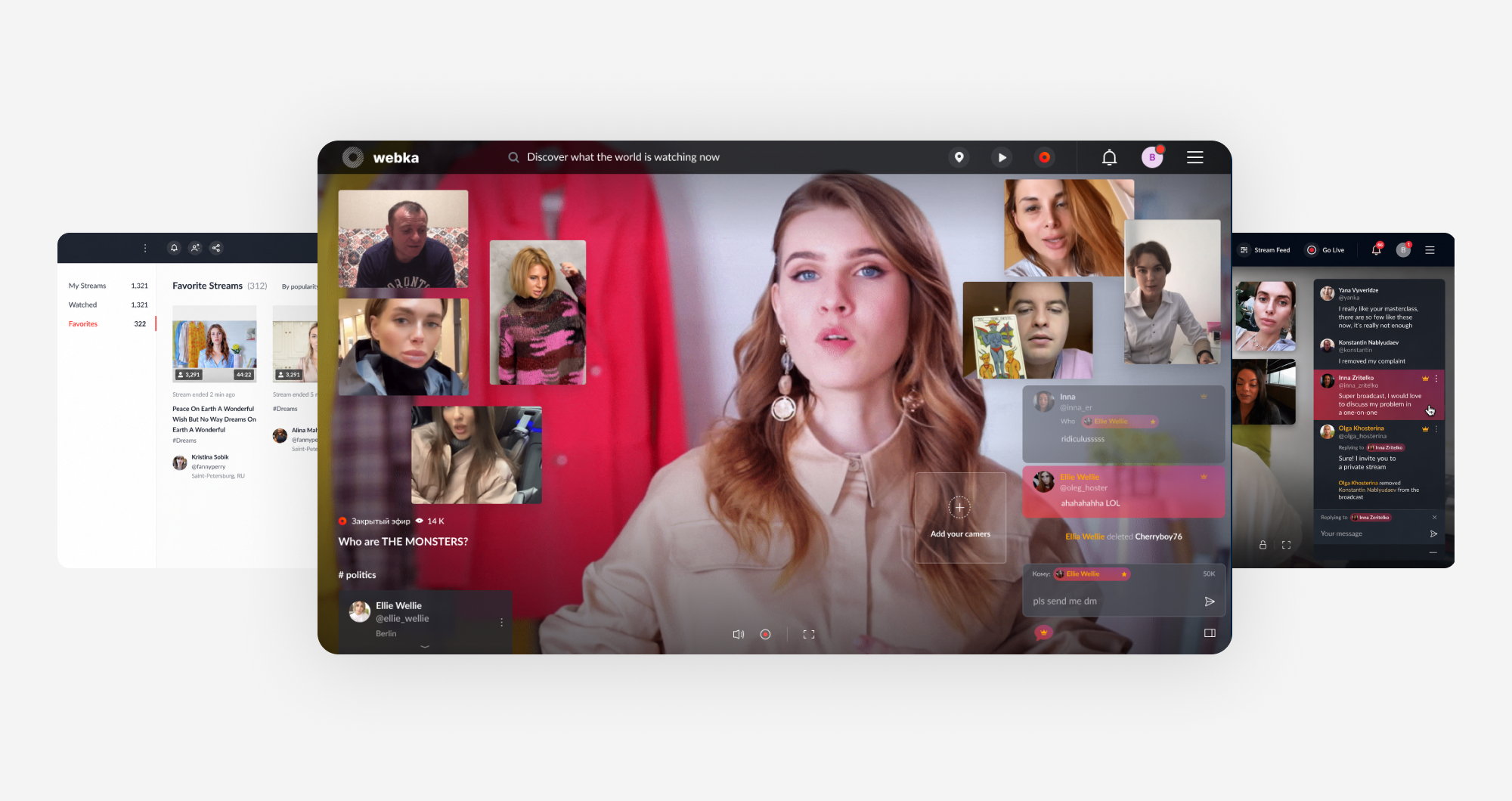
Webka streaming platform

Product Context

A streaming platform for creators, audiences, and real-time interaction

Webka was designed for people who wanted to build an audience through live video: coaches, language teachers, fitness trainers, educators, influencers, and creators with niche expertise. For viewers, it offered access to live content, interaction, learning, entertainment, and community.

The product combined several types of behavior: discovering creators, watching live streams, following profiles, joining broadcasts, chatting, paying for content, managing subscriptions, and returning to creators over time.

Because the product served both creators and viewers, the experience had to support two different motivations: creators needed tools to broadcast, manage their profile, and earn; viewers needed simple discovery, trust, participation, and an easy way to follow or pay for content.

Webka served two ecosystems: creators building an audience and viewers discovering live expertise and entertainment.


Product Screens

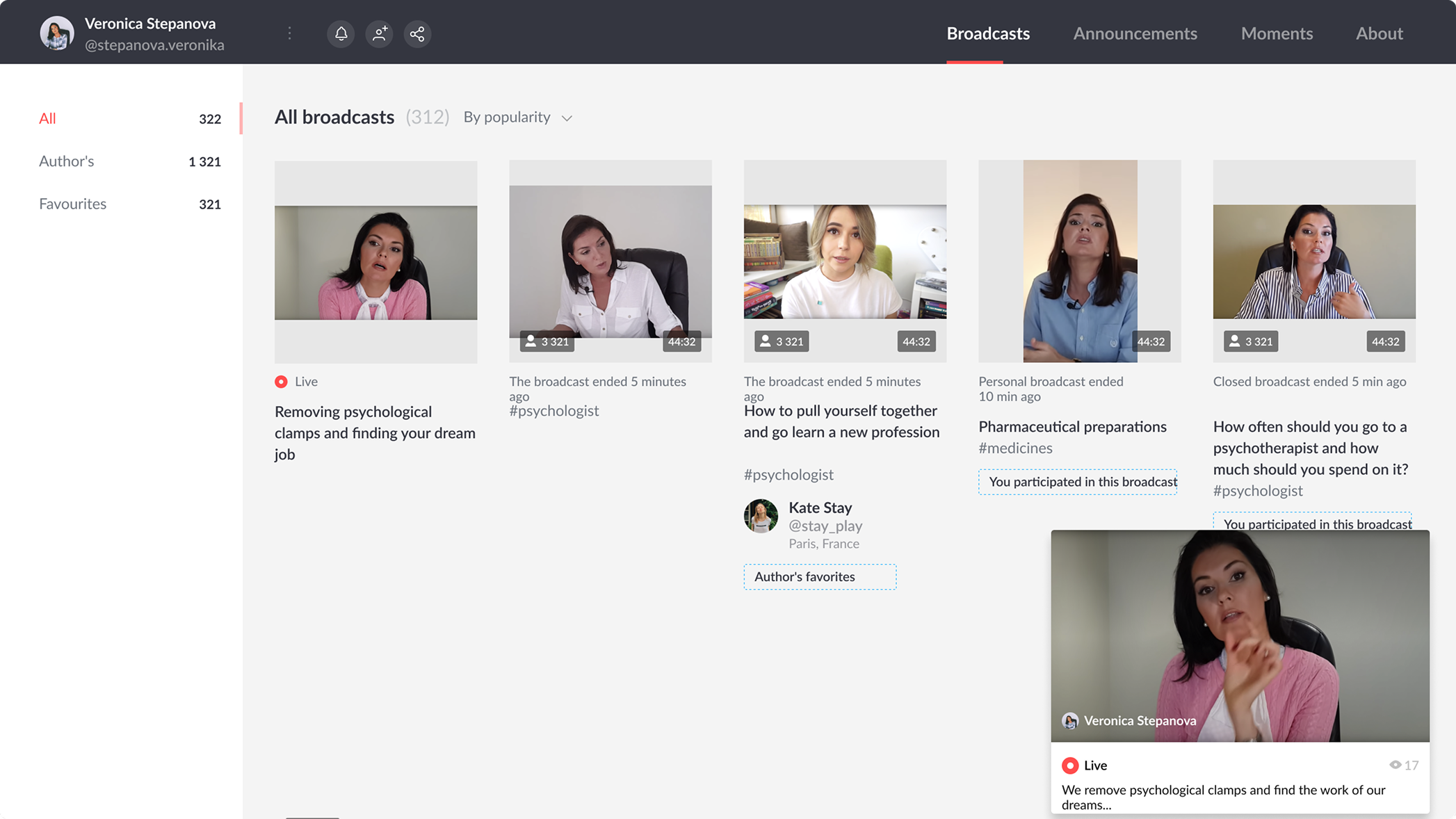
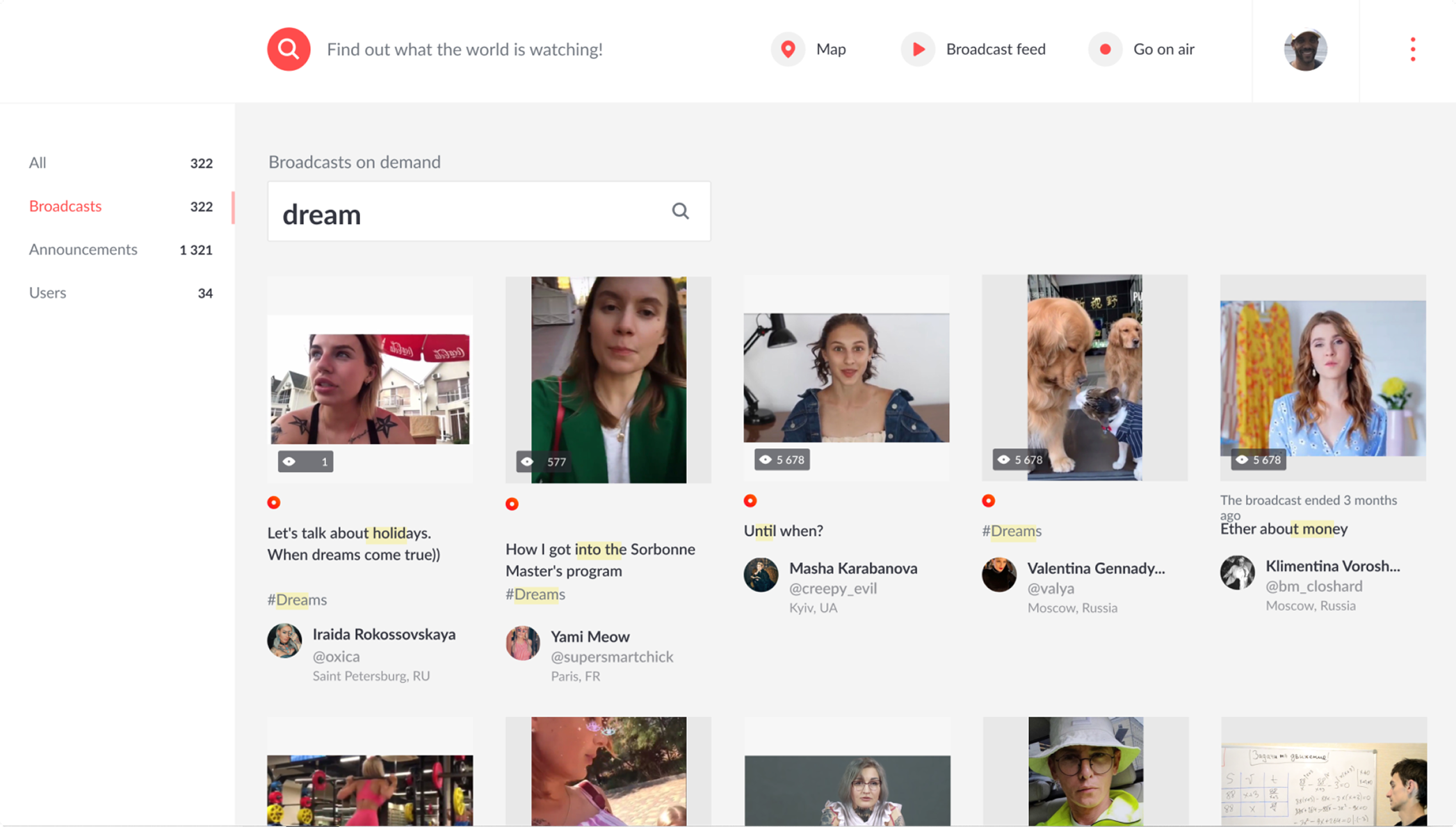
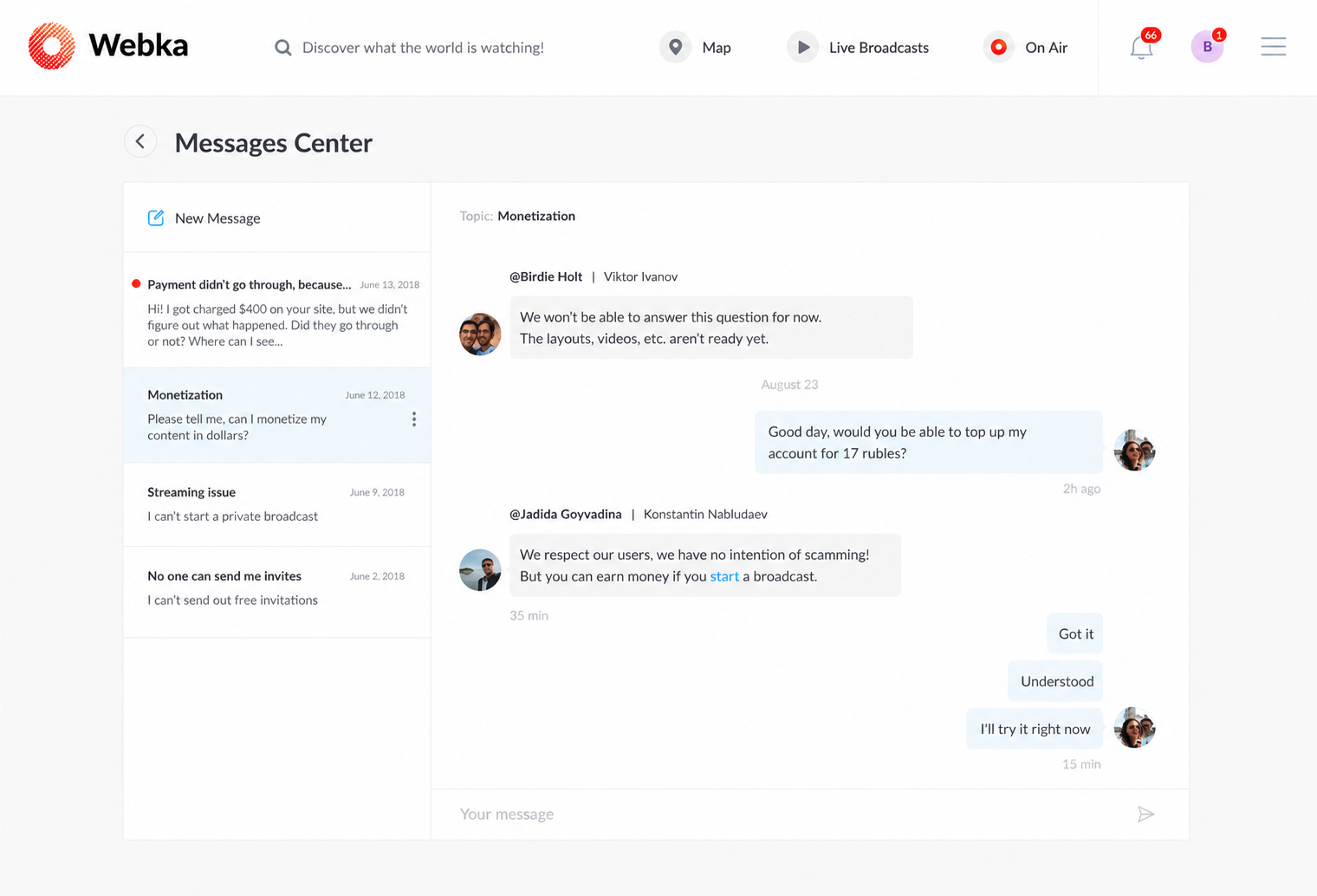
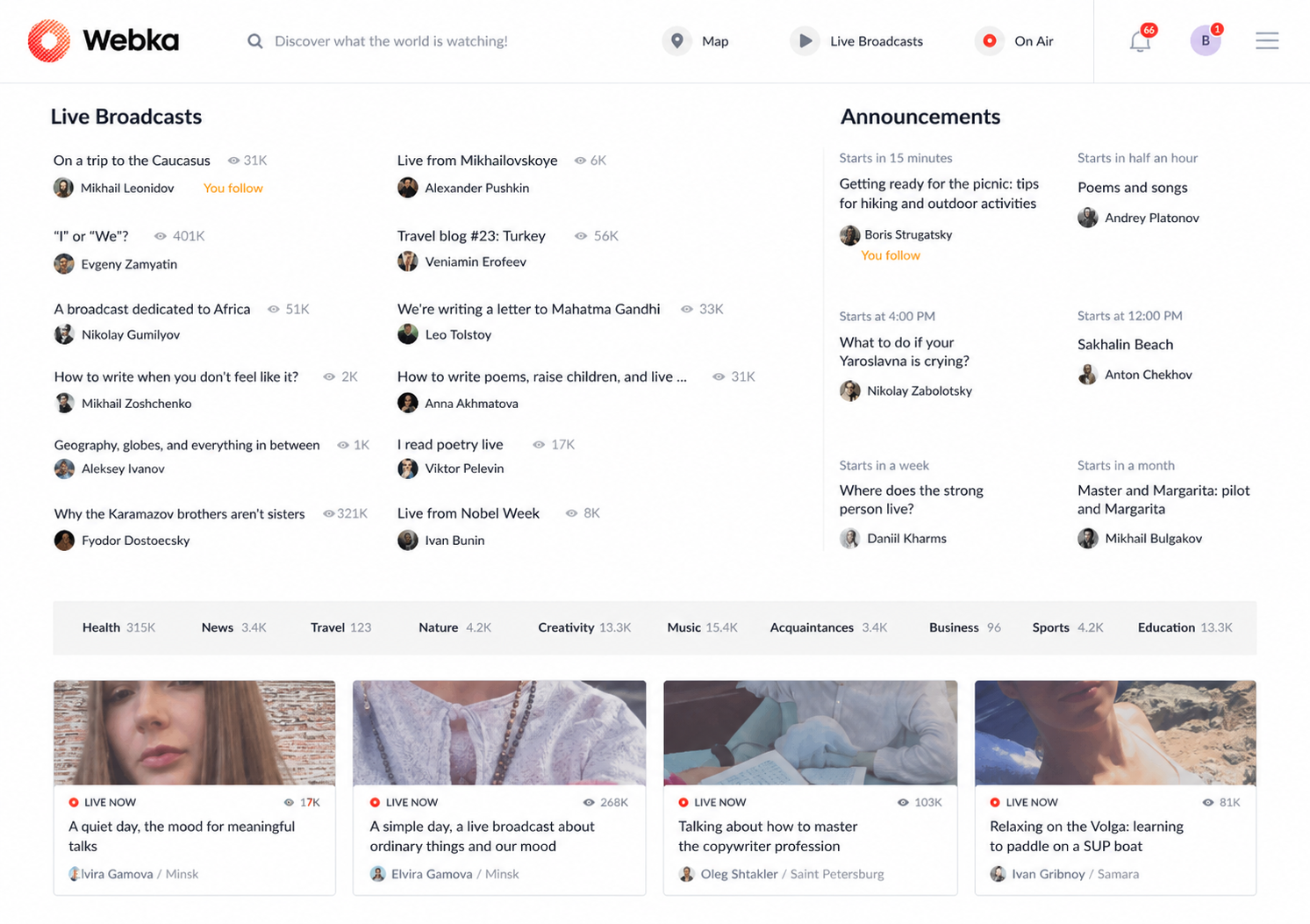
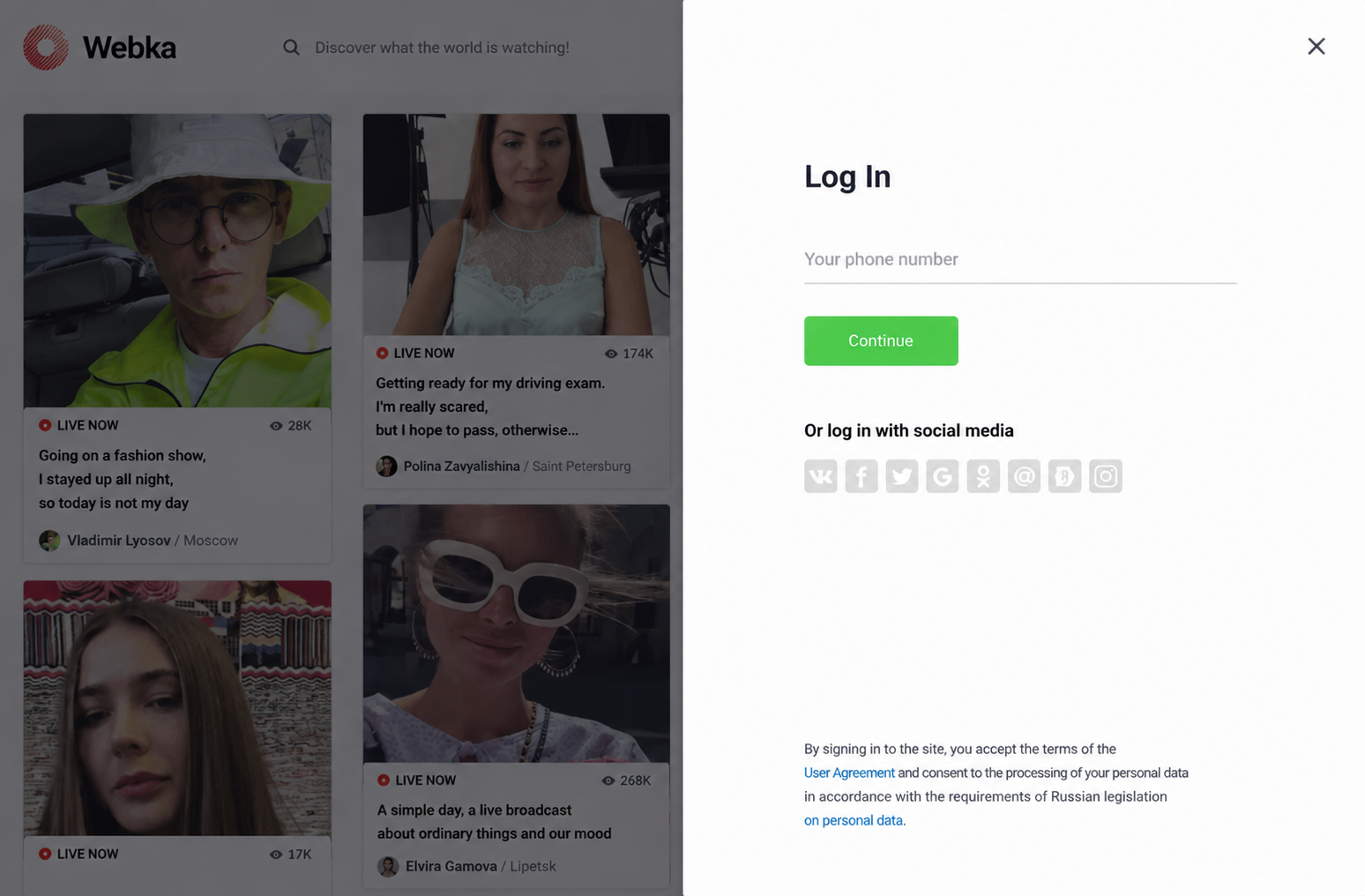
Creator profiles, broadcasts, mobile flows, and viewer experience


The Challenge

The MVP had potential, but the creator and viewer journeys needed structure

Webka already had a working MVP, but the core product experience still needed clearer flows, stronger consistency, and better support for real creator and viewer behavior. The challenge was to improve the existing product without breaking it: clarify key scenarios, connect disconnected flows, support both web and mobile, and prepare the product for growth.

Key issues

Unclear creator onboarding
Creators needed a more obvious path from registration to profile setup, first broadcast, and first audience interaction.
Broadcast creation friction
Creating and managing a live broadcast required clearer steps, settings, visibility controls, and post-broadcast actions.
Viewer discovery gaps
Viewers needed better ways to find relevant creators, understand what a broadcast was about, and decide whether to join or follow.
Monetization complexity
Creators needed clearer tools for earnings, paid content, payments, subscriptions, and understanding how they could make money.
MVP inconsistency
The product had grown from an MVP, so visual patterns, layouts, and interaction logic were not always consistent across web and mobile.
Design system gap
The team needed a shared component foundation and visual language to move faster and keep the product coherent as it grew.

Research & Discovery

Understanding why creators go live — and why viewers return

The research focused on understanding the motivations of both sides of the platform. Creators wanted visibility, audience growth, income, and a reliable way to share expertise or personal content. Viewers wanted useful, entertaining, or intimate live experiences that felt easy to join and worth returning to.

The research helped the team see Webka not just as a streaming tool, but as an ecosystem: creator identity, audience relationship, content discovery, live interaction, monetization, and trust all had to work together.

User interviews
Creator motivations, viewer expectations, barriers to broadcasting, and reasons for returning.
Benchmarking
Streaming, social, education, creator, and video platforms to understand familiar patterns and expectations.
JTBD
Jobs To Be Done framed why creators and viewers came to the product and what progress they expected.
CJM
Customer Journey Maps connected onboarding, discovery, broadcast, interaction, monetization, and retention.
User personas
Aligned the team around educators, coaches, trainers, influencers, niche creators, and paying viewers.
Internal feedback
Customer support, PMs, and top management helped identify business priorities and repeated product issues.

Design Focus

Turning an MVP into a scalable creator platform

The design work focused on making Webka more coherent across creator flows, viewer flows, web, mobile, and monetization scenarios. The product needed clearer journeys, stronger visual consistency, and a foundation that could support future growth.

Creator onboarding and profile setup

I worked on flows that helped creators enter the platform, set up their profile, understand available tools, and prepare for their first broadcast. The goal was to reduce uncertainty and make the path from registration to first meaningful action more obvious — so creators could start building their audience sooner.

Creator onboarding flow

Clearer onboarding helped creators move from registration to first broadcast with fewer steps and less uncertainty.

Broadcast creation and management

I designed scenarios for creating, scheduling, launching, and managing broadcasts. This included topic and category selection, visibility settings, chat behavior, moderation options, and post-broadcast management. The flow needed to feel empowering and structured without being intimidating for first-time streamers.

Structured broadcast creation helped creators launch confidently and manage their live sessions more effectively.

Viewer discovery and participation

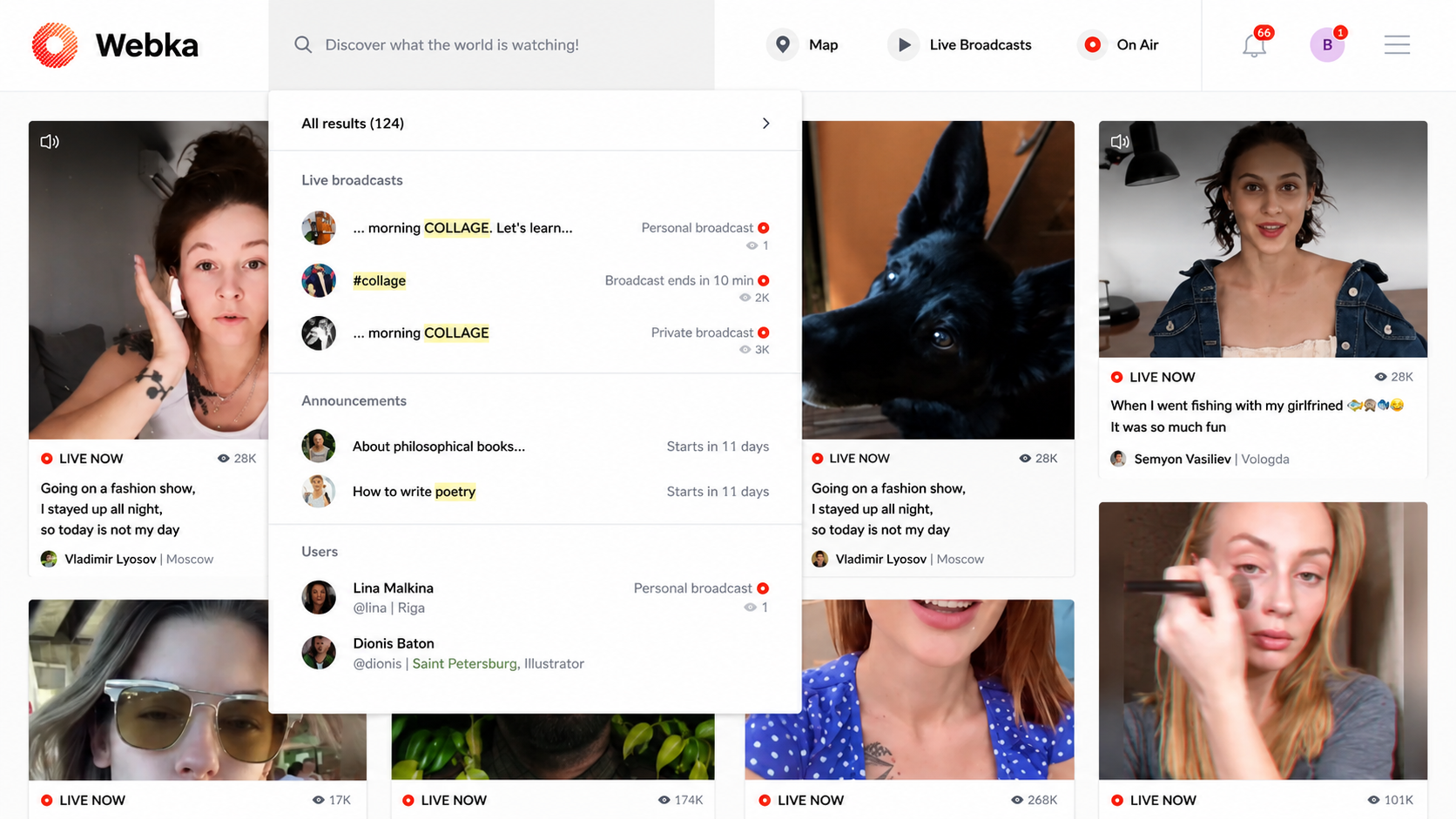
For viewers, the product needed simple ways to find relevant broadcasts, understand who the creator was, join streams, interact in chat, and return to content they cared about. I worked on discovery flows, creator previews, participation mechanisms, and signals that helped viewers decide whether to engage or follow.

Viewer discovery experience

Better discovery and trust signals helped viewers find relevant creators and decide to join or follow faster.

Monetization and earnings management

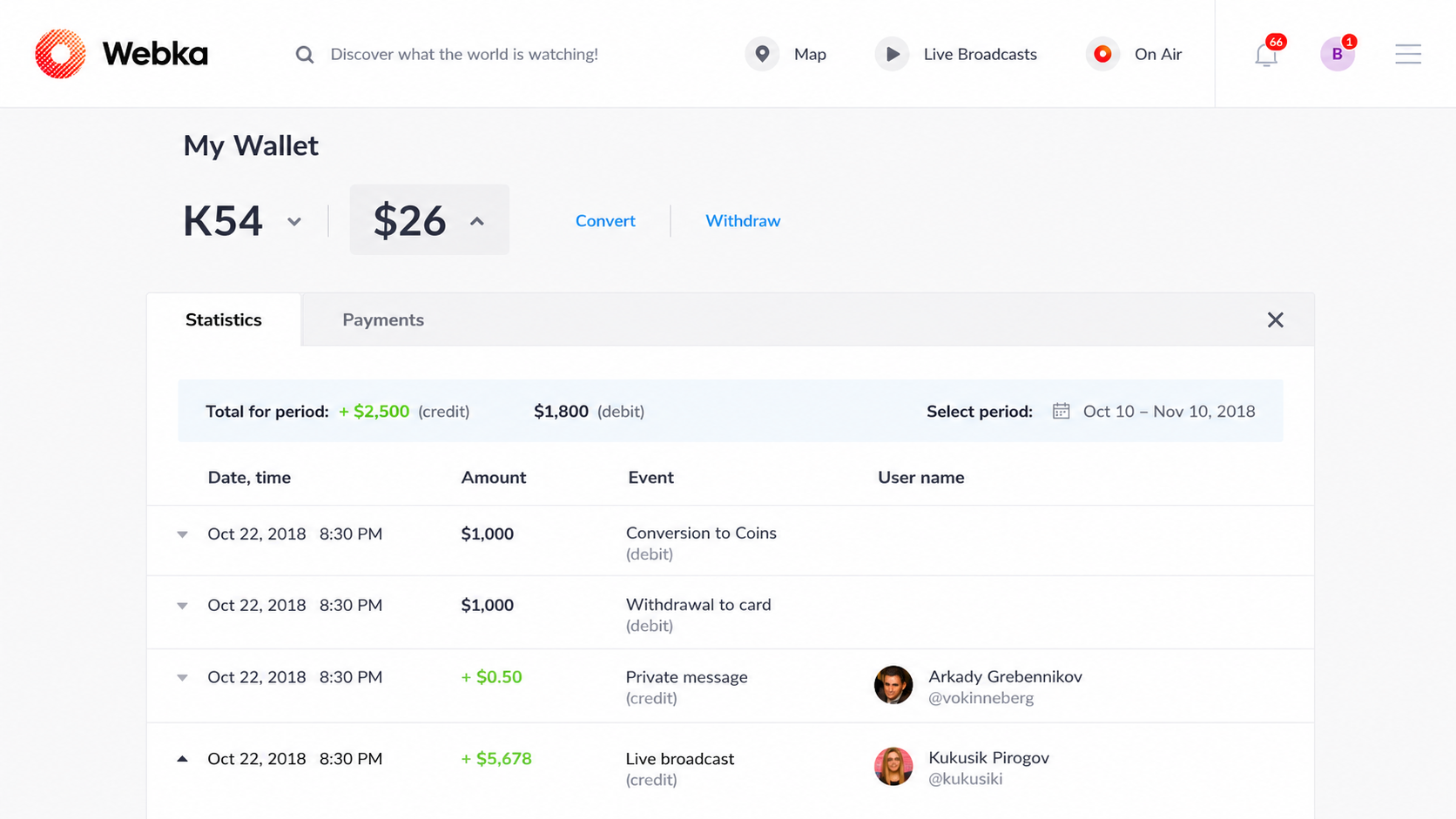
Creators needed to understand how they could earn, manage income, track payments, and control paid interactions. I worked on flows related to paid broadcasts, subscriptions, tips, payouts, and financial transparency — making monetization feel structured and understandable rather than hidden or complex.

Monetization and earnings flows

Clearer monetization flows helped creators understand how to earn and manage paid interactions with confidence.

Design system and visual language

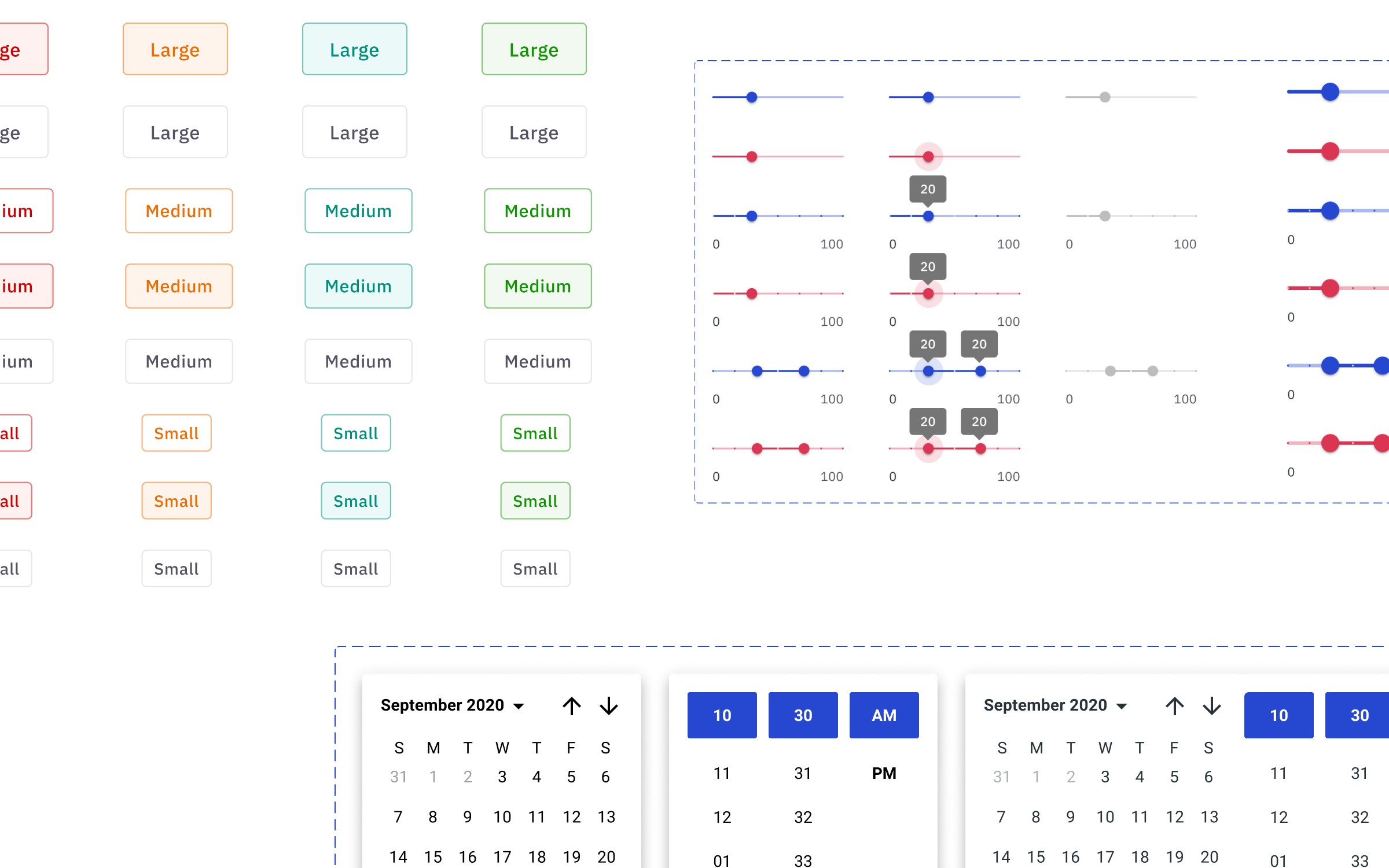
A major part of the work was migrating layouts from Sketch to Figma, cleaning up inconsistencies, and building a shared design system. This helped the team work faster, reduce visual fragmentation, and create a more consistent product language across web and mobile surfaces as the product grew beyond the initial MVP.

Design system and visual language

A shared component library and visual language made the product more consistent and the team faster across platforms.


Result Design

A clearer product ecosystem for creators and viewers

The final work improved the structure of the existing MVP and helped prepare Webka for further product growth. Creator flows became more understandable, viewer scenarios became easier to navigate, and the interface gained a stronger visual and component foundation.

Instead of a collection of separate MVP screens, the product started moving toward a more coherent ecosystem: onboarding, profiles, broadcasts, discovery, interaction, monetization, mobile scenarios, and internal product logic connected through shared patterns.

The improved product connected creator tools, viewer experience, and monetization flows into a more coherent platform.


Process

How I worked

01
Understand
Studied the existing MVP, product logic, user groups, business goals, and technical constraints before designing anything.
02
Research
Conducted interviews, benchmarking, JTBD, CJM, user personas, and internal feedback sessions to understand creator and viewer needs.
03
Structure
Mapped user flows for onboarding, profile setup, broadcast creation, discovery, participation, monetization, and account management.
04
Design
Created web and mobile layouts, interaction flows, creator tools, viewer scenarios, and product screens in Figma for both platforms.
05
Systemize
Migrated design files from Sketch to Figma, cleaned up visual inconsistencies, and contributed to the design system and shared visual language.
06
Present
Prepared demos, presented results to stakeholders, worked in Agile cycles, and collaborated with PMs, developers, QA, technical writers, support, and top management.

Results

A stronger foundation for a scalable streaming product

MVP → Product
From MVP to structured experience
The existing MVP became more structured through clearer flows, scenarios, and consistent design patterns across web and mobile.
Web + Mobile
Cross-platform coverage
Designed and improved experiences across web and mobile product surfaces for both creator and viewer scenarios.
Creator flows
End-to-end creator journeys
Improved onboarding, broadcast creation, profile setup, moderation tools, and monetization scenarios for content creators.
Viewer UX
Discovery and participation
Improved discovery, live stream participation, profile comprehension, and interaction flows for viewers across the platform.
Design system
Shared component foundation
Migrated layouts from Sketch to Figma and helped build a shared component library and visual language for the team.
Research-driven
User-grounded decisions
Used interviews, benchmarking, JTBD, CJM, and personas to connect design decisions to real creator and viewer needs.

Reflection

Creator platforms need both emotion and infrastructure

This project showed that a streaming product is not just a video player. It is an ecosystem of creator identity, viewer trust, live interaction, payments, content management, and repeated engagement. For creators, the product has to feel empowering: it should help them go live, communicate with an audience, build credibility, and understand how they earn. For viewers, it has to feel simple and trustworthy: easy to discover, easy to join, and worth returning to.

The most important design challenge was balancing inspiration and infrastructure. A creator platform needs an engaging visual language and an emotional user experience, but it also needs reliable flows, payment clarity, mobile usability, and a design system that can scale as the product grows.