HRTech · Labor Market Analytics · AI Agent
This HRTech product helped organizations make better talent and workforce decisions using labor market data. The platform supported analysis of salary benchmarks, talent demand, candidate availability, location insights, market trends, and recruiting intelligence for the US labor market.
I worked on the design of the existing analytics platform, including data-heavy dashboards, reporting workflows, labor market views, and interfaces that helped HR and talent acquisition teams turn complex data into actionable insights. I also created an AI agent from scratch within the product ecosystem — covering UX, scenarios, branding, visual language, animation, and interaction behavior.
Product Context
The platform helped HR and talent acquisition teams understand labor market conditions before making hiring decisions. Users could explore salary ranges, talent supply, talent demand, location differences, job market trends, skills data, and recruiting opportunities across the US market.
This kind of product sits between analytics and decision support. Users were not just looking at charts — they needed to understand what the data meant for hiring strategy, sourcing plans, compensation decisions, and workforce planning. The interface had to make complex labor data readable and useful for analysts who needed detail, recruiters who needed quick answers, TA leaders who needed strategic insight, and stakeholders who needed shareable reports.
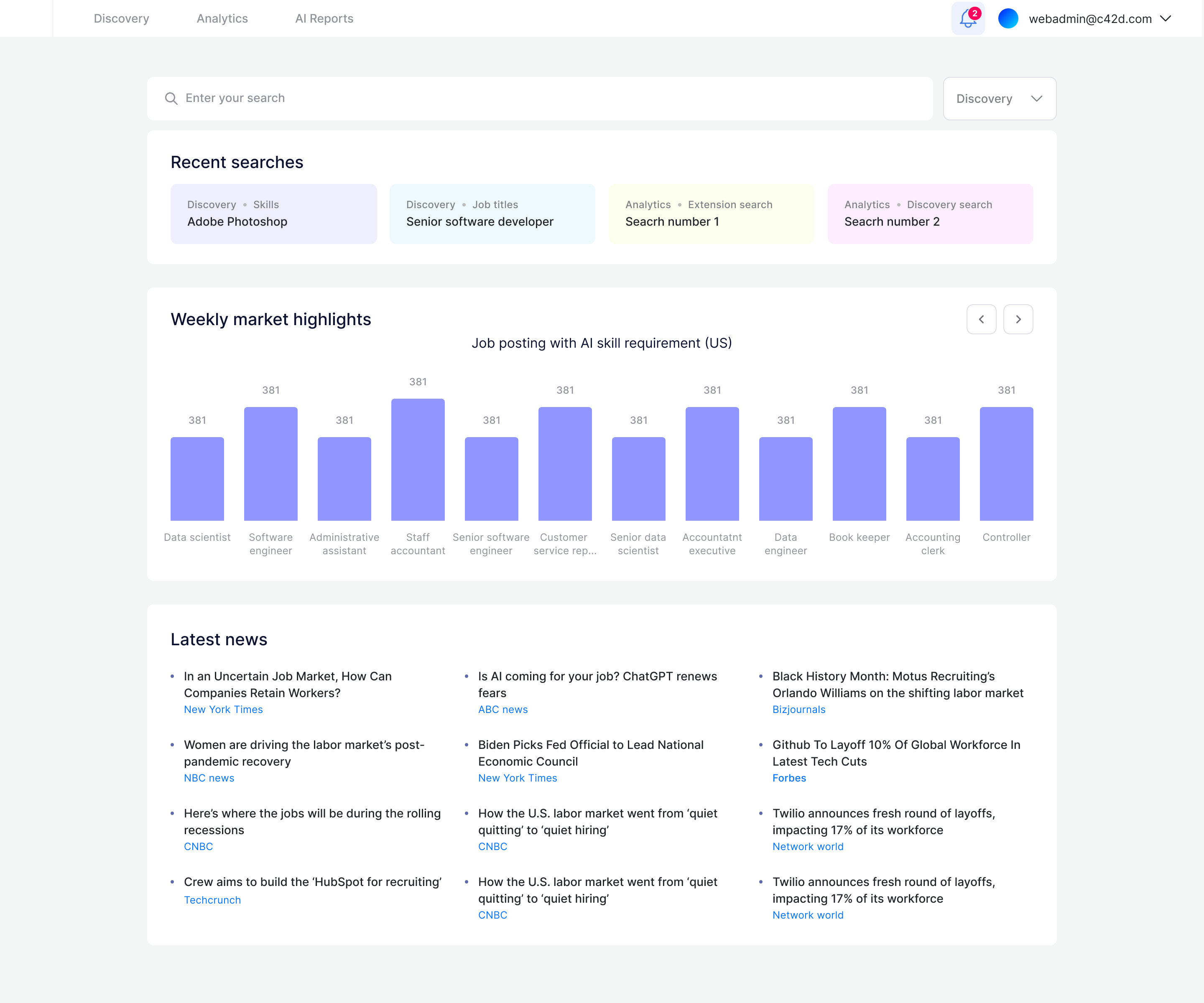
The platform connected labor market signals — salary, demand, availability, location — into one structured analytics environment.
Users & Workflows
The product served several user groups across HR, recruiting, analytics, and business decision-making. Each group approached the data differently: some needed detailed exploration, while others needed quick summaries, comparisons, and reports.
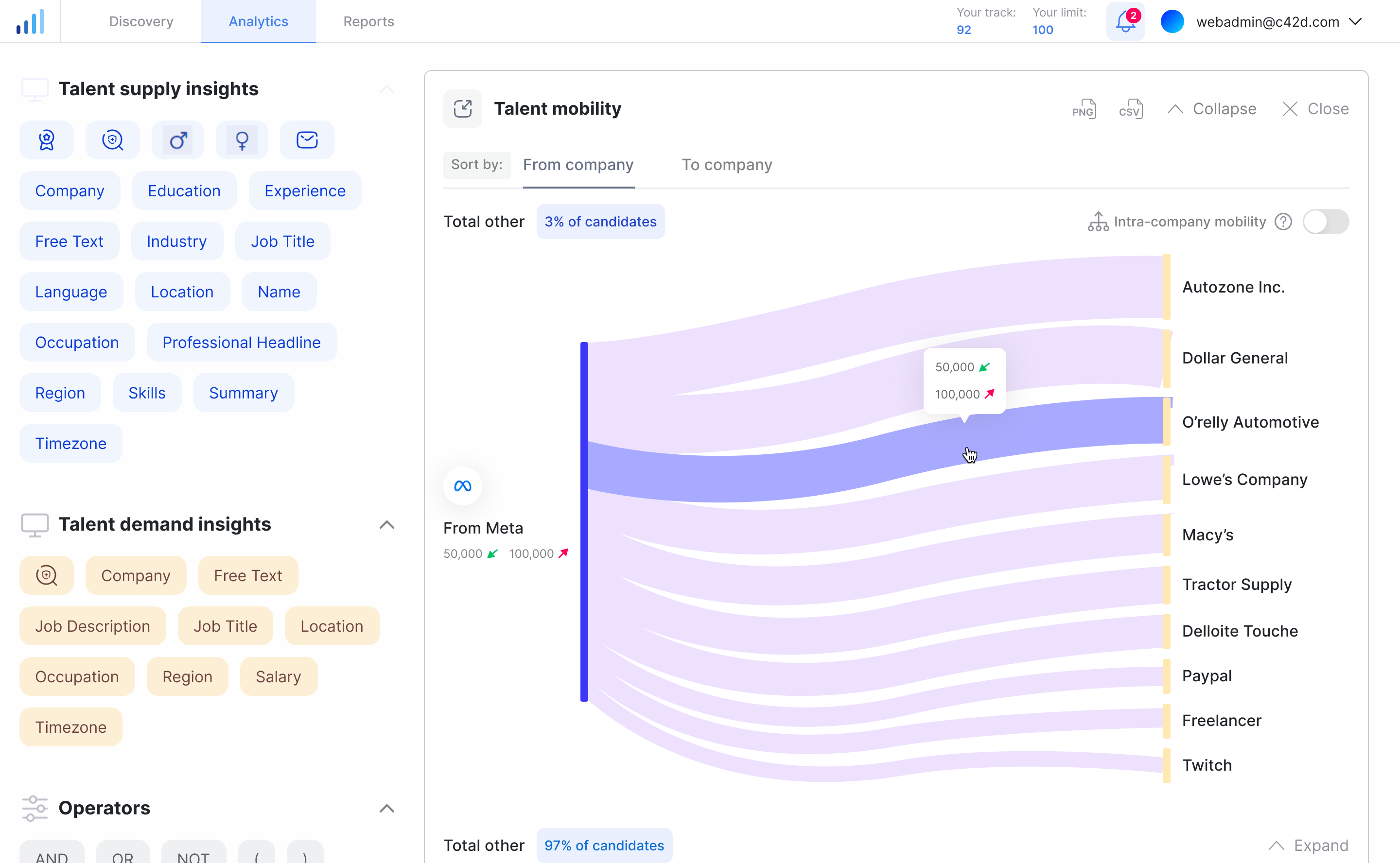
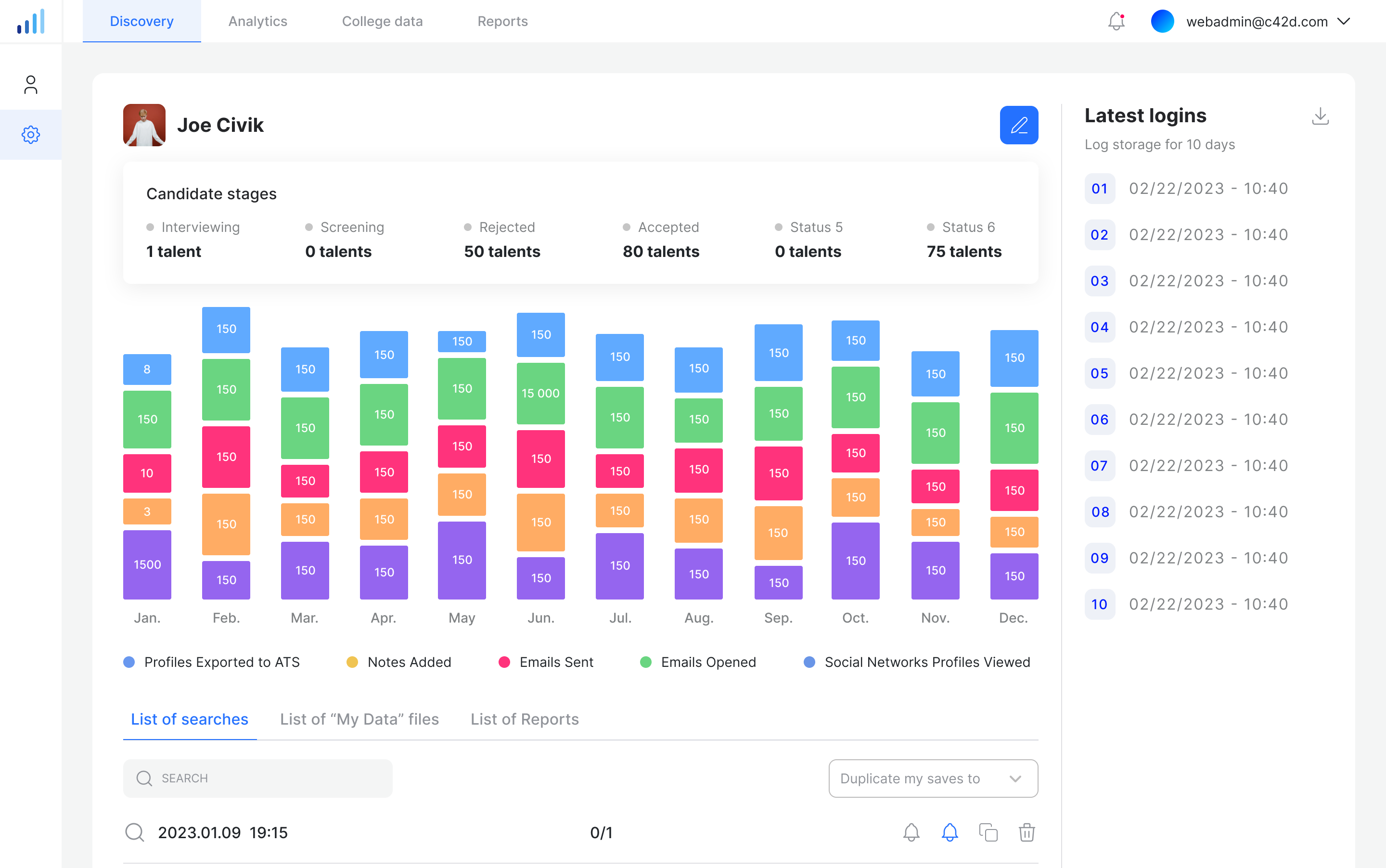
Product Screens


Platform Design
The platform design work focused on turning complex labor market data into structured, readable, and shareable insight. The product needed to support both detailed analysis and fast decision-making across different user types and workflows.
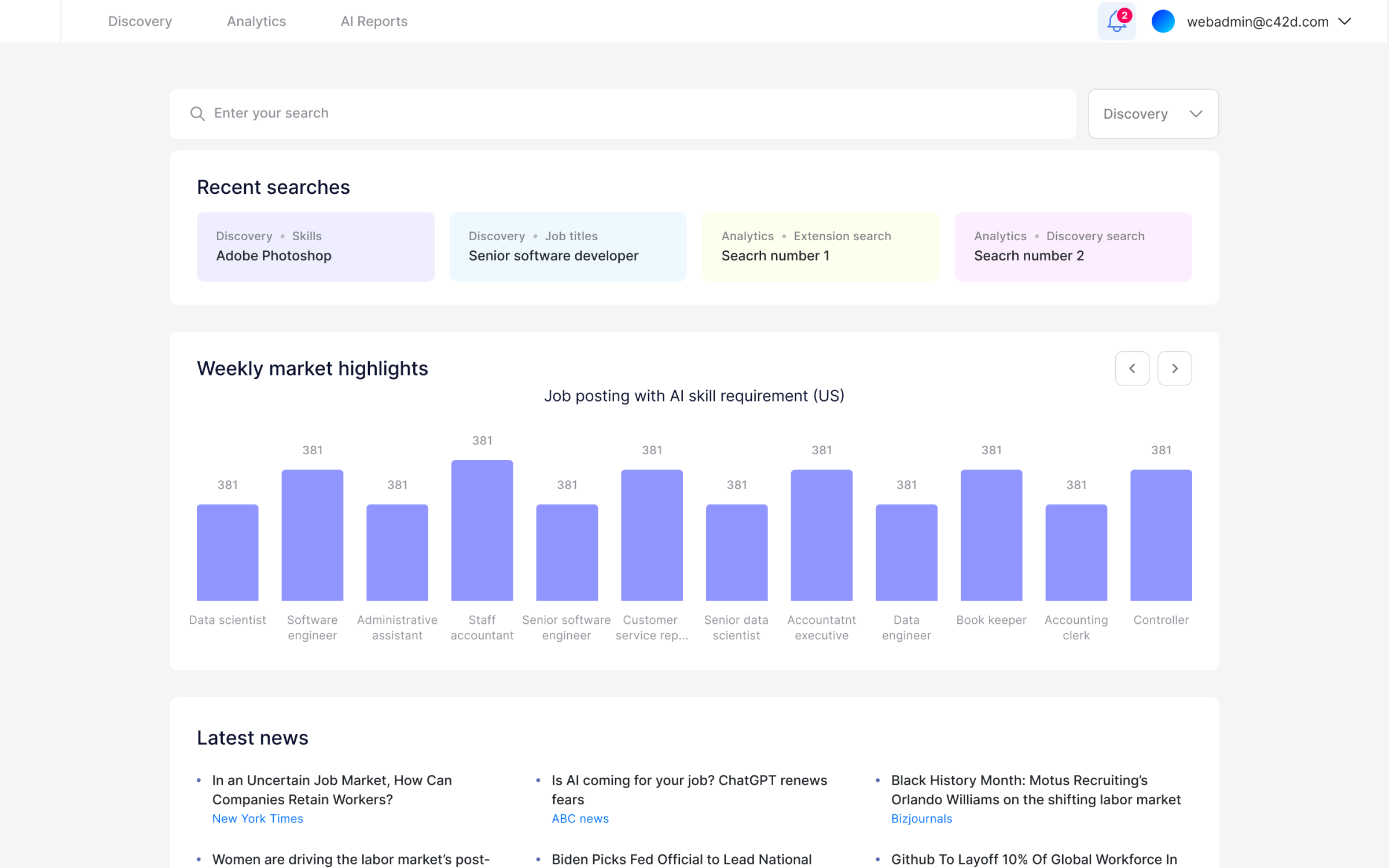
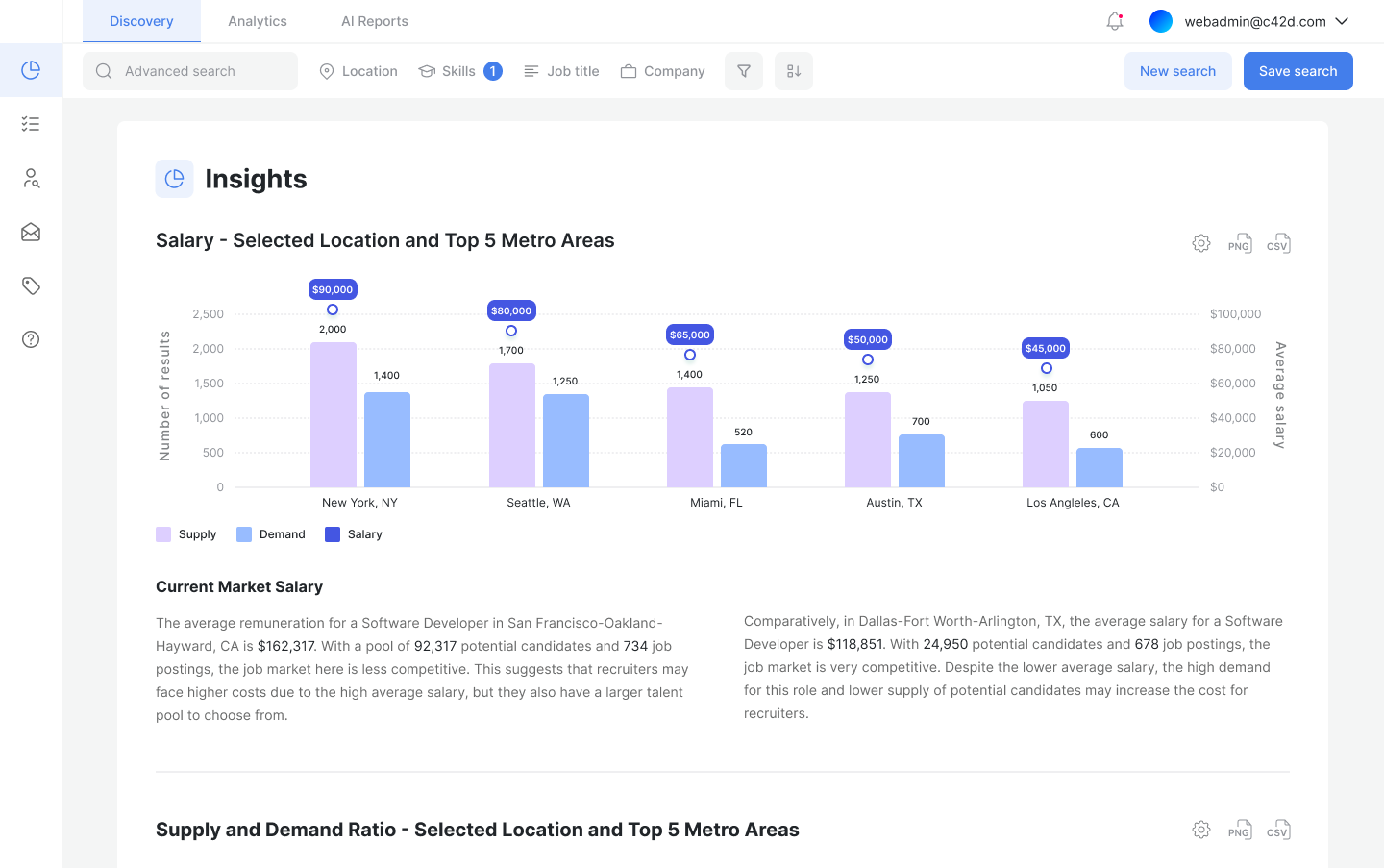
I designed dashboard structures that helped users understand key labor market signals: talent demand, salary benchmarks, candidate availability, market competitiveness, and location-based differences. The dashboards had to balance density with clarity — showing enough data to be useful without overwhelming users who needed to make fast decisions.
Dashboard structures surfaced key labor market signals without requiring users to dig through raw data manually.
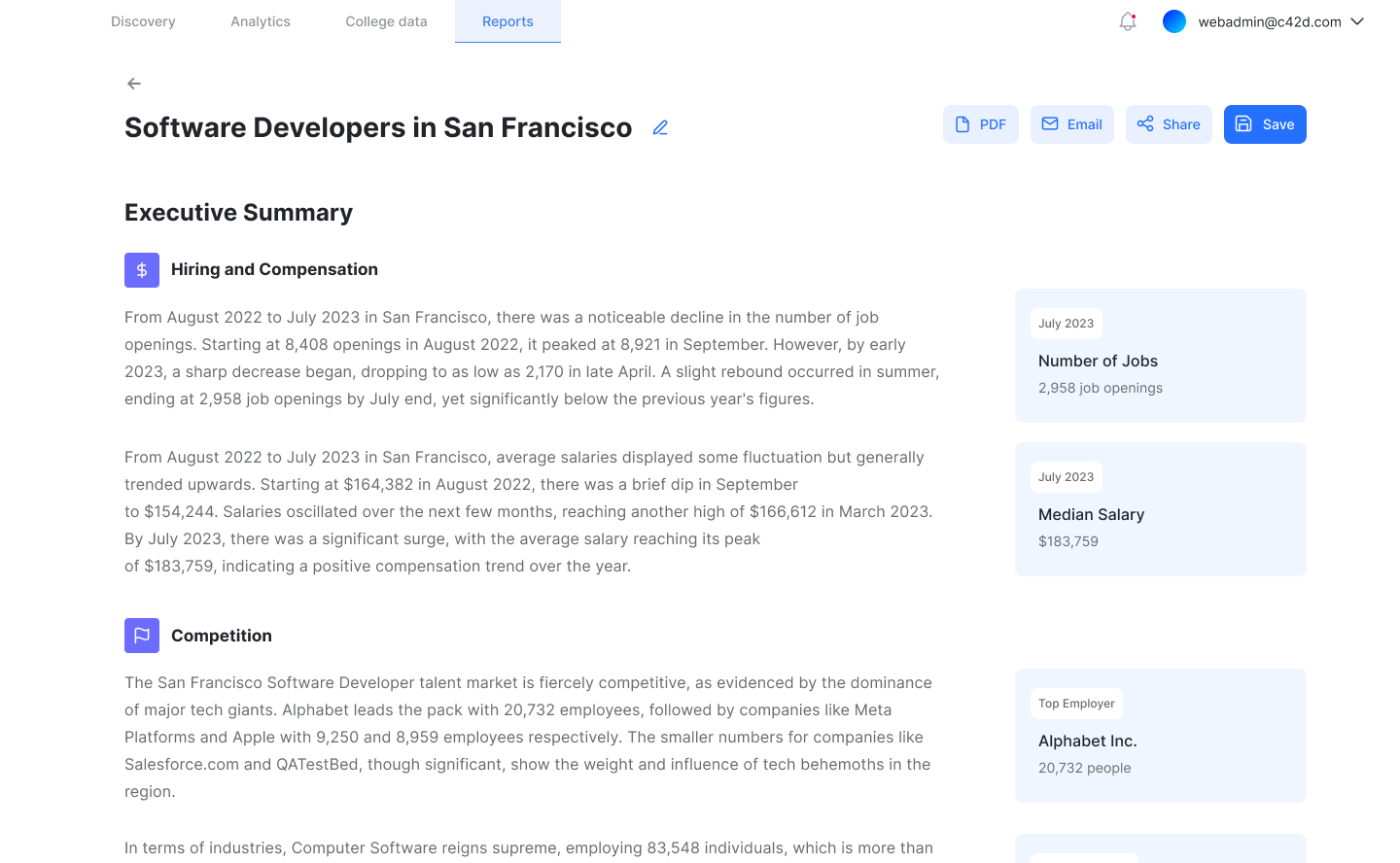
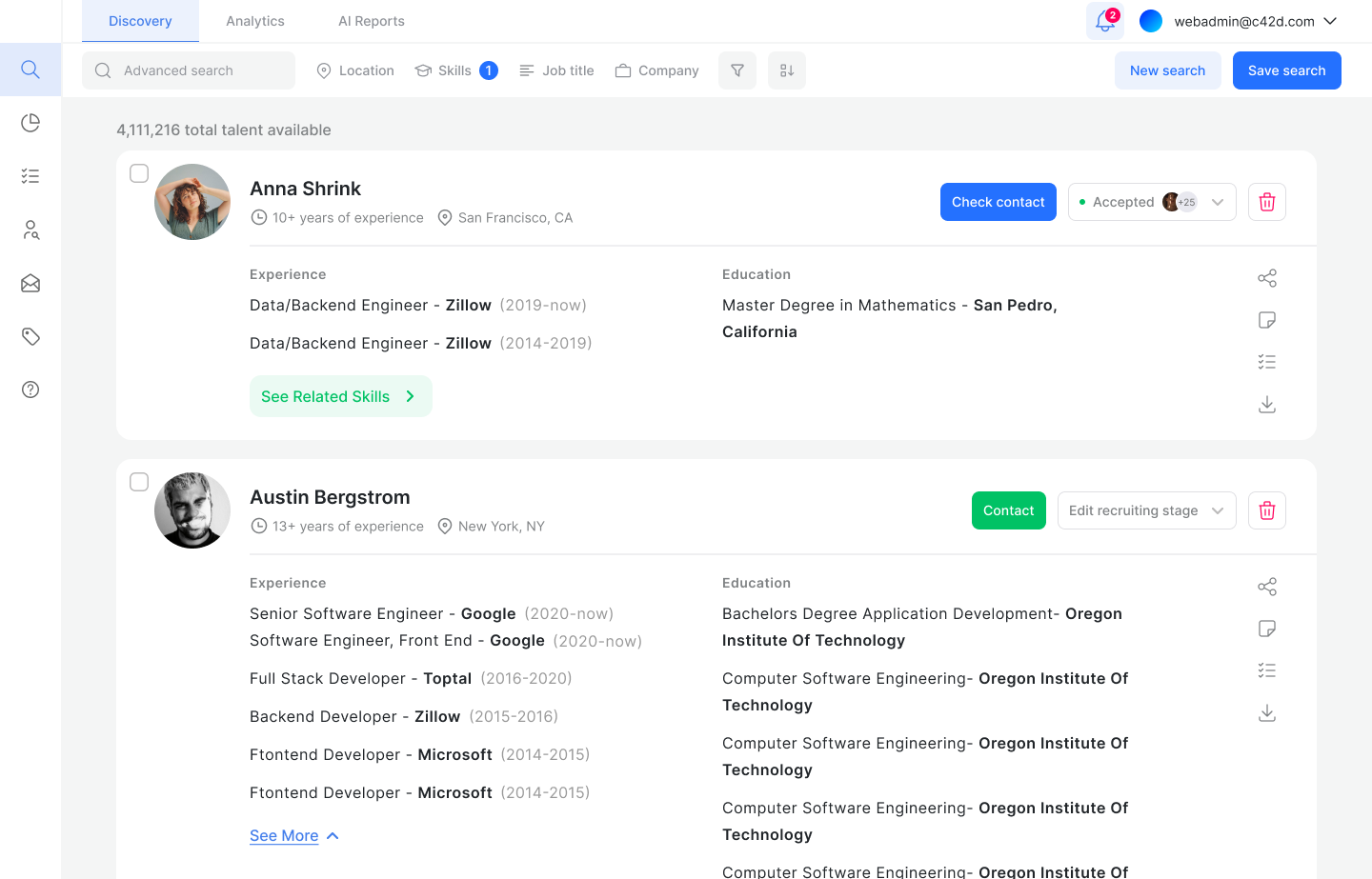
The platform supported labor market reports and shareable outputs. I worked on flows that helped users move from data exploration to report creation — structured summaries, filtered views, and presentation-ready materials that recruiting consultants and TA leaders could share with clients and stakeholders.
Report generation flows connected analytics exploration to shareable, stakeholder-ready outputs.
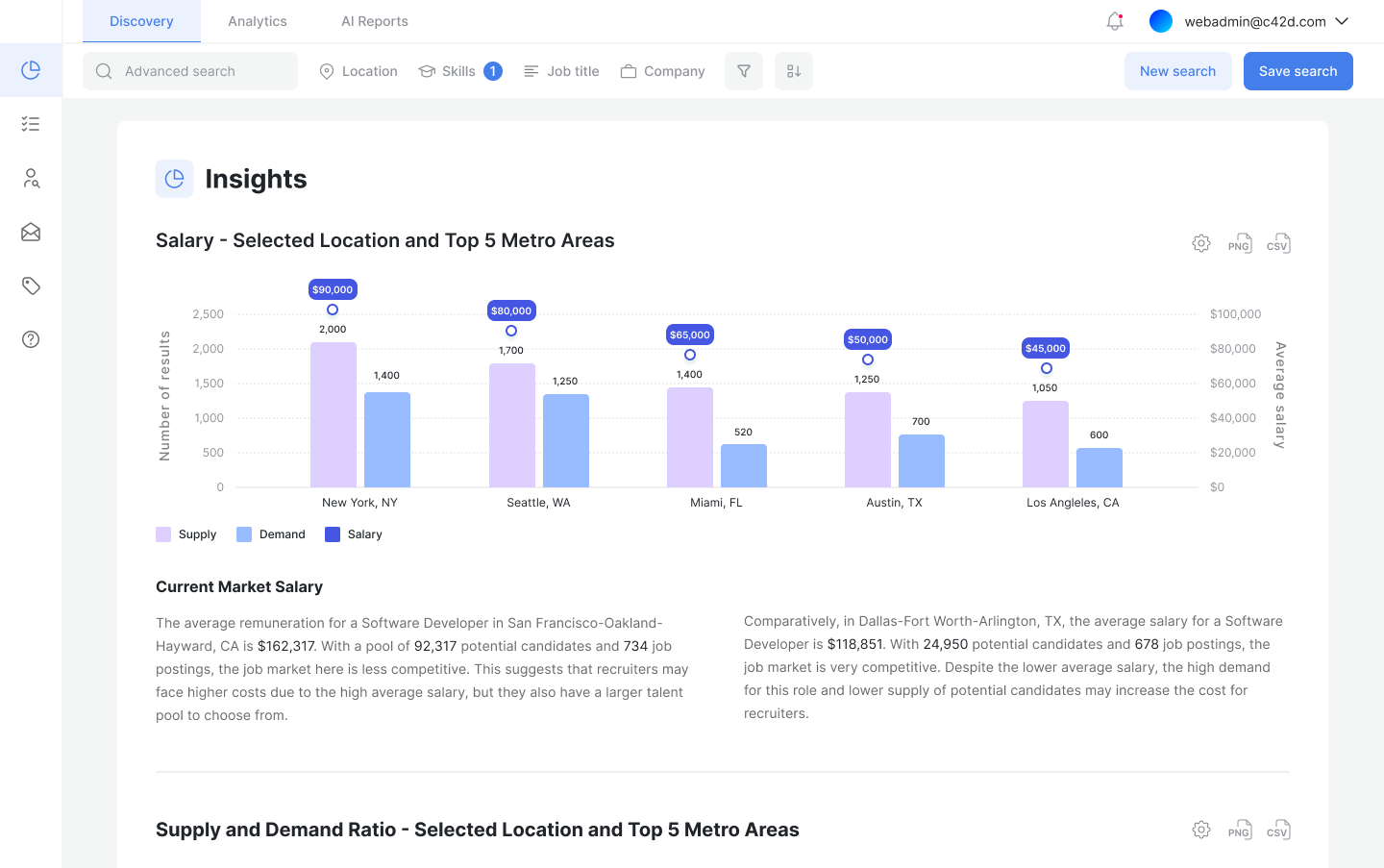
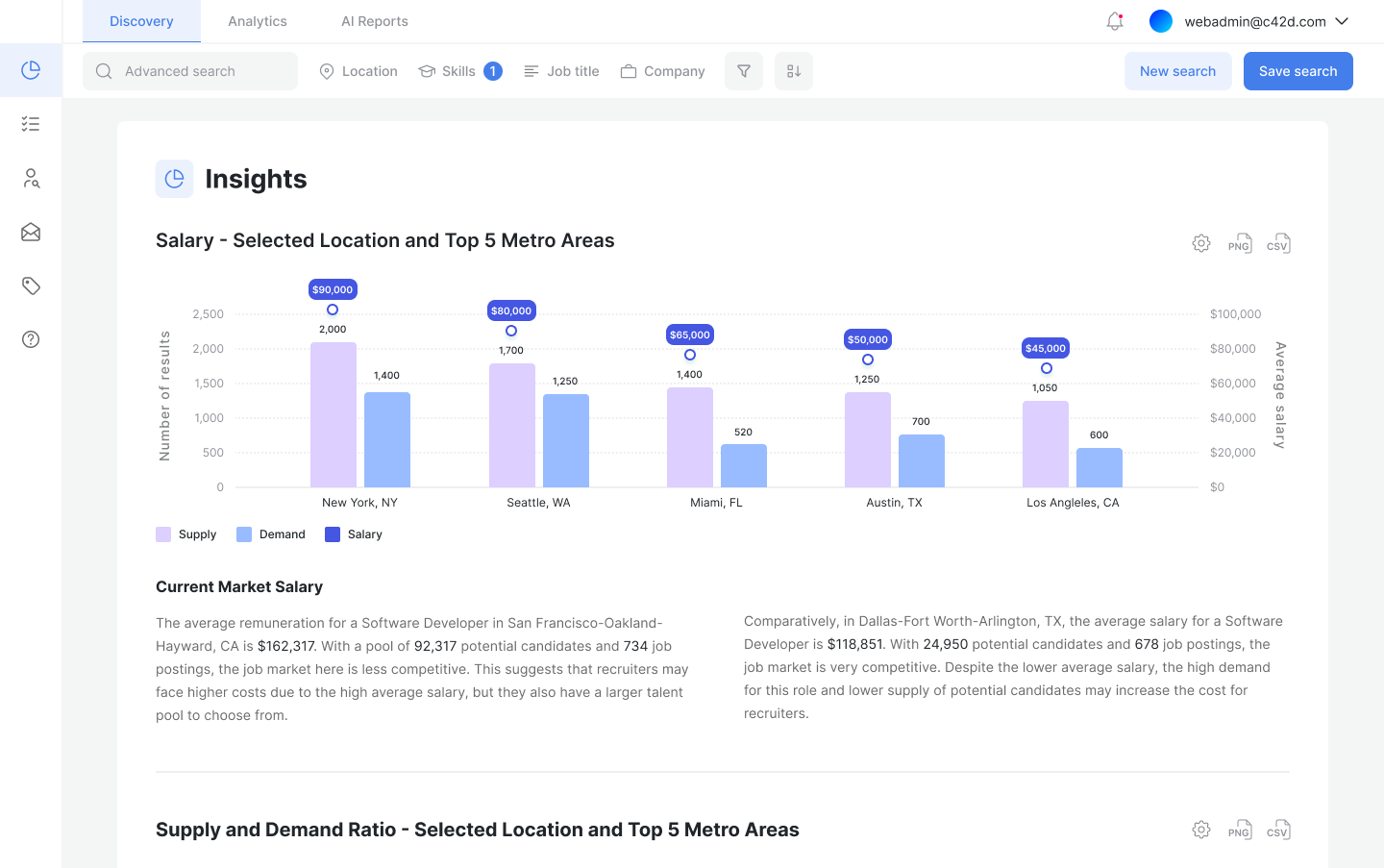
Users needed to compare locations, roles, talent availability, salary ranges, and demand signals side by side. I designed comparison structures that made differences easier to scan, interpret, and explain — helping TA leaders build location strategies and recruiters understand where the market was more or less competitive.
Comparison views helped users understand location and role differences without manually reconciling separate data sources.
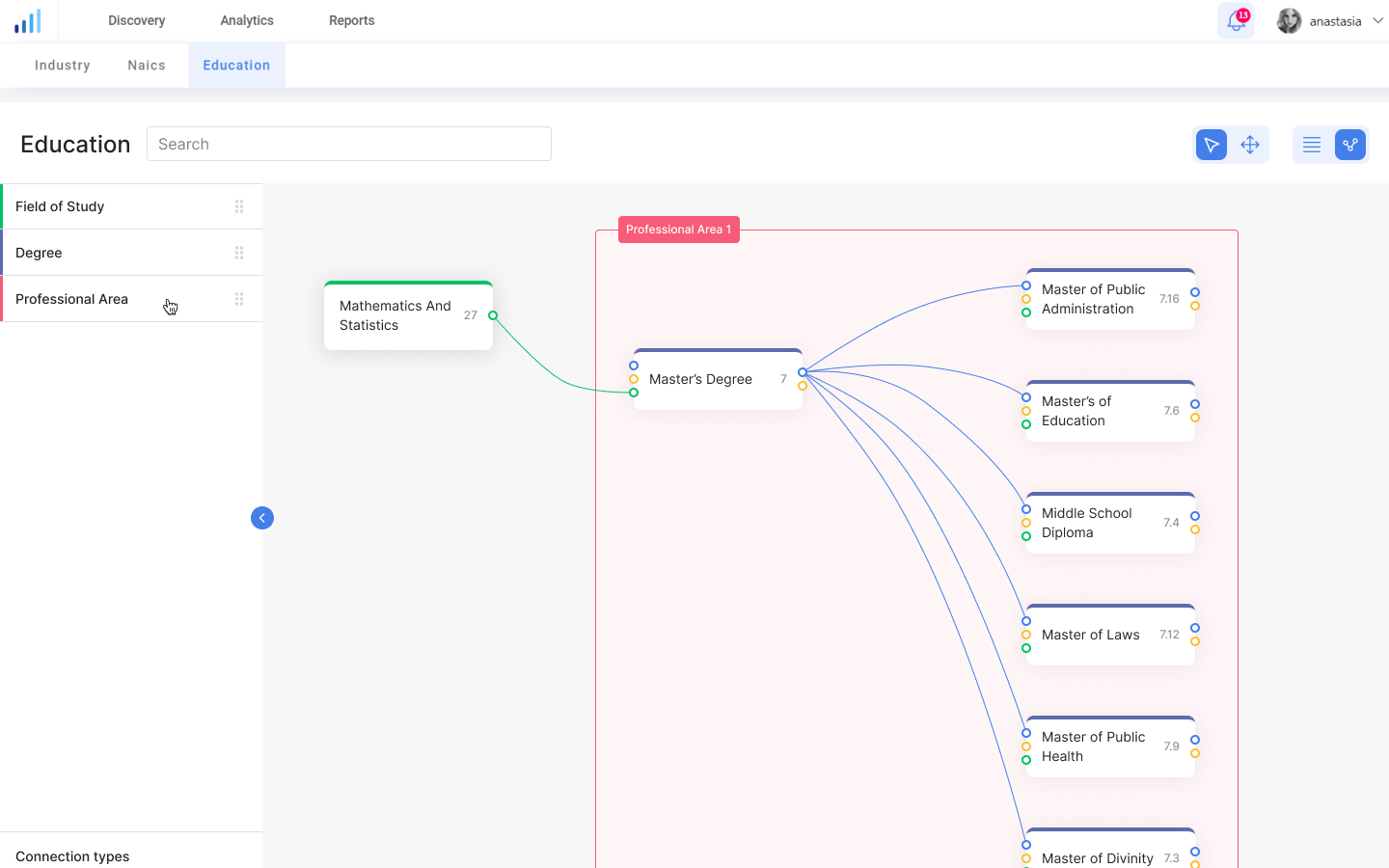
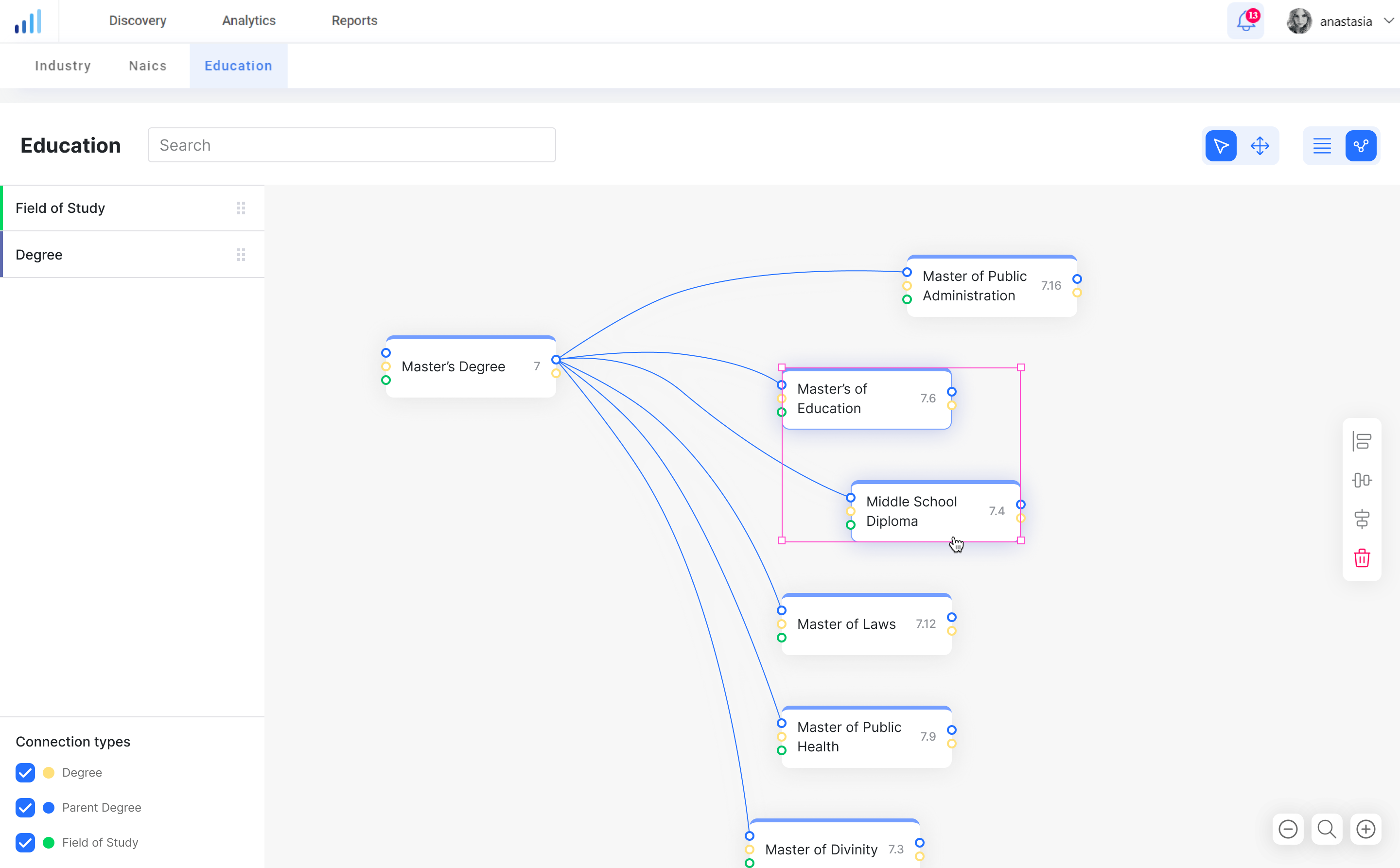
Labor market data is dense. I worked on visual hierarchy, charts, tables, filters, and information architecture so users could read the data without losing context. The goal was to make it easy to move between a broad market view and a specific detail — without the interface requiring users to rebuild their mental model every time.
Clear visual hierarchy and progressive data depth helped users stay oriented across complex datasets.
AI Agent
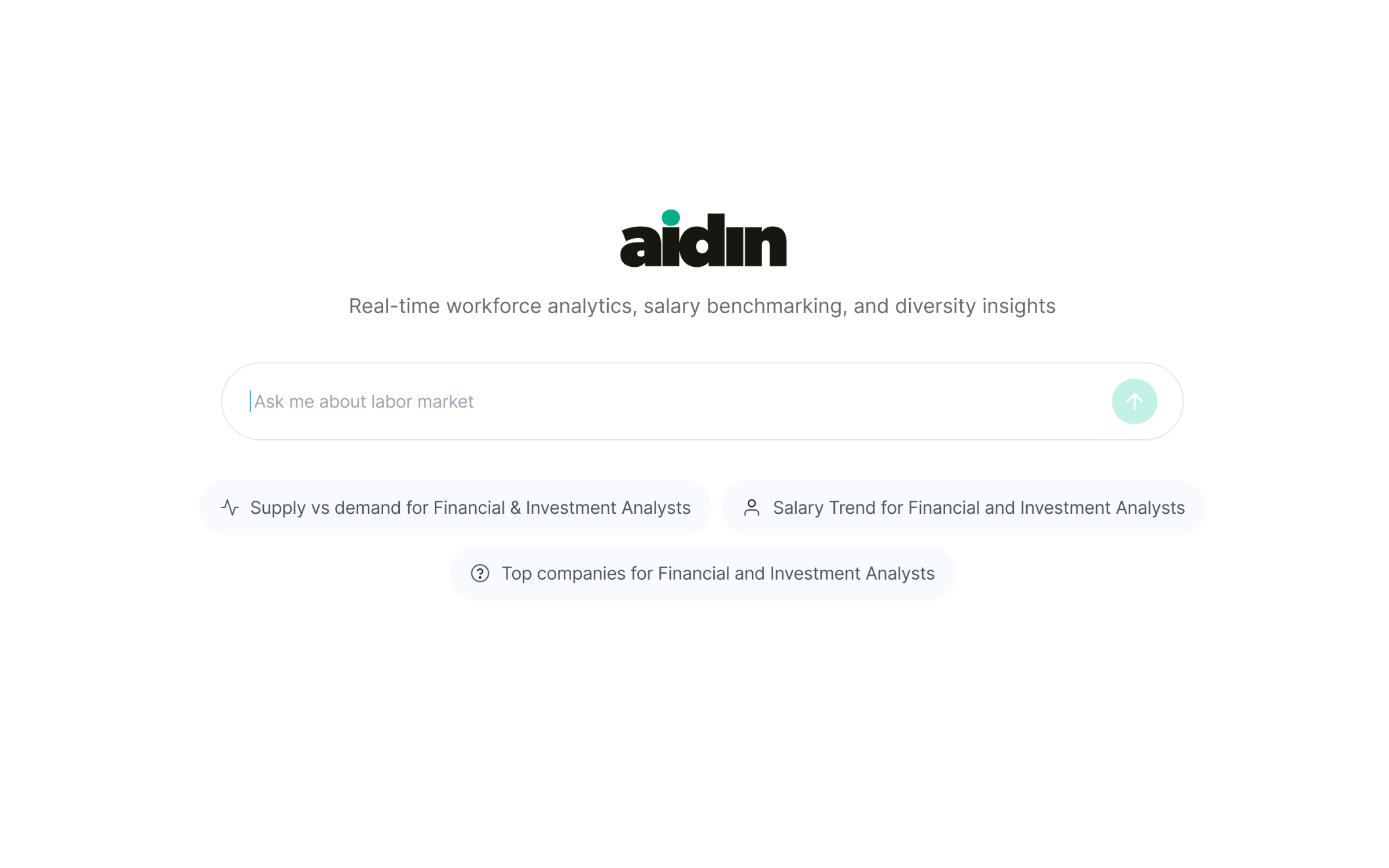
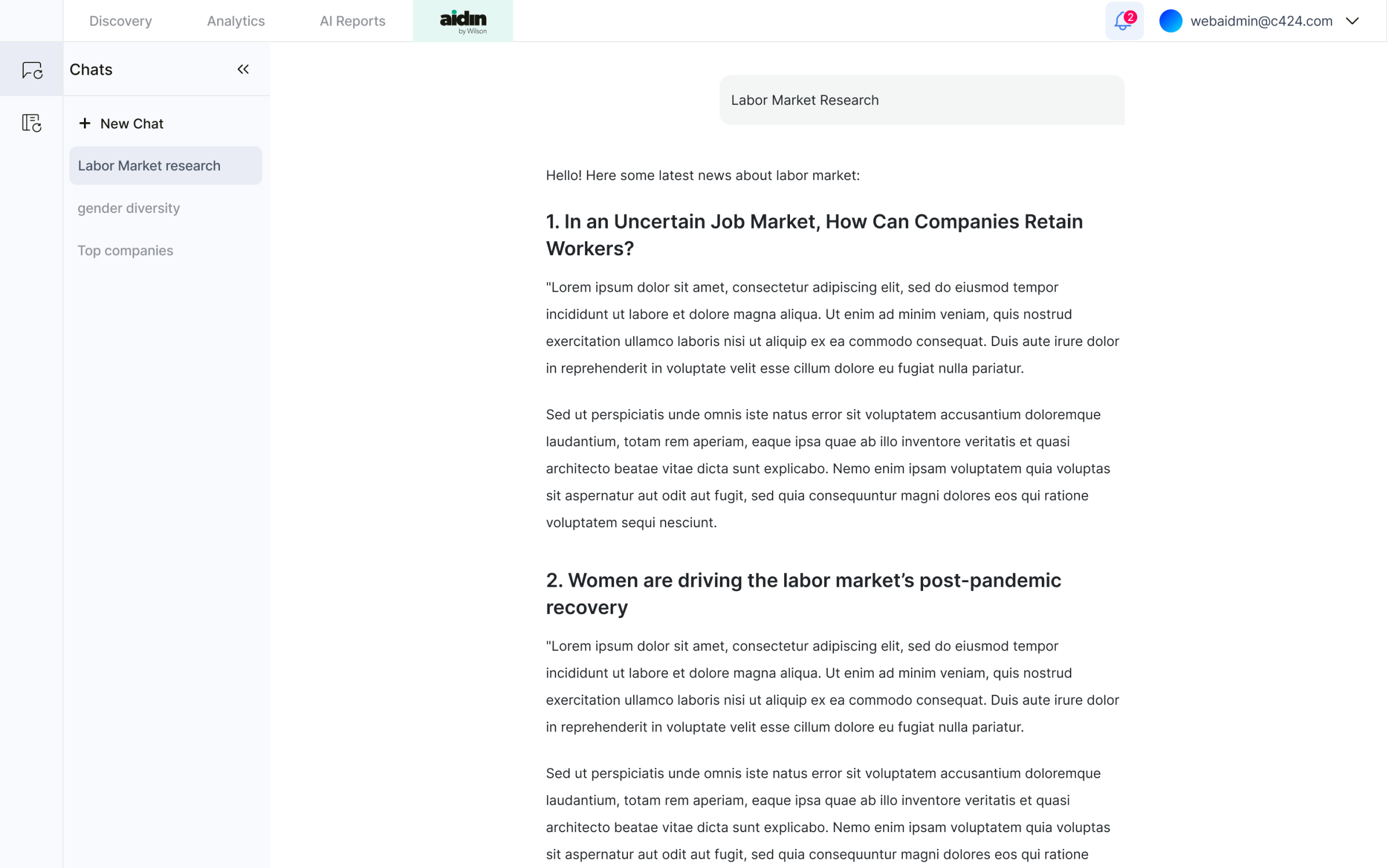
In addition to the core platform, I created an AI agent from scratch. The agent was designed to help users interact with labor market data in a more guided and conversational way: asking questions, generating summaries, exploring market conditions, and getting faster access to insights without relying only on manual filtering and dashboard exploration.


Process
Result Design
The final work contributed to the design of a labor market analytics platform that helped users explore workforce data, understand market conditions, compare locations, review salary benchmarks, generate reports, and communicate findings to stakeholders.
The AI agent added a new layer to the product experience. It gave users a more guided way to ask questions, summarize insights, and move through data-heavy workflows without relying only on manual filtering and dashboard exploration.
The platform combined structured analytics with an AI layer — giving different users the level of guidance and depth they needed.
Outcomes
Reflection
This project showed that analytics UX is not just about showing more data. HR and talent acquisition users need to understand what the data means and how it affects hiring decisions, workforce planning, compensation strategy, and recruiting priorities.
Designing the platform meant creating structure around complex labor market signals: salary benchmarks, talent demand, candidate availability, location comparisons, and report generation. The interface had to help people move from "what is the data?" to "what does this mean for my hiring plan?" — without losing the detail that analysts and consultants needed.
The AI agent reinforced an important lesson: AI should not sit outside the product as a decorative chatbot. It has to be embedded in the user's workflow, understand the data context, and help people move from question to insight faster. Branding and animation matter too — an agent that feels trustworthy and consistent with the product is one users will actually return to.