FinTech · Proprietary Trading · 0→1 Concept · Research

Creating a proprietary trading app

Amega Proprietary Trading was a 0→1 concept for a new prop trading product. The idea was based on a challenge model where traders enter an evaluation phase, follow trading rules, manage risk, reach profit targets, avoid drawdown limits, and may receive access to a funded account.

My work started before the product existed. I helped shape the concept from the ground up: collecting business requirements, researching competitors, analyzing competitor reviews, recruiting respondents, conducting interviews, synthesizing insights, and translating the findings into low-fidelity drafts and a high-fidelity MVP concept.

The result was not a full production product, but an early product direction: a main dashboard concept and several screens that showed how challenge progress, rules, risk, and trader performance could be presented clearly.
Role
Senior Product Designer
Domain
FinTech / Proprietary Trading
Platform
Mobile App
Team
PM, stakeholders
Scope
Business requirements, competitor research, interviews, low-fi drafts, high-fi concept
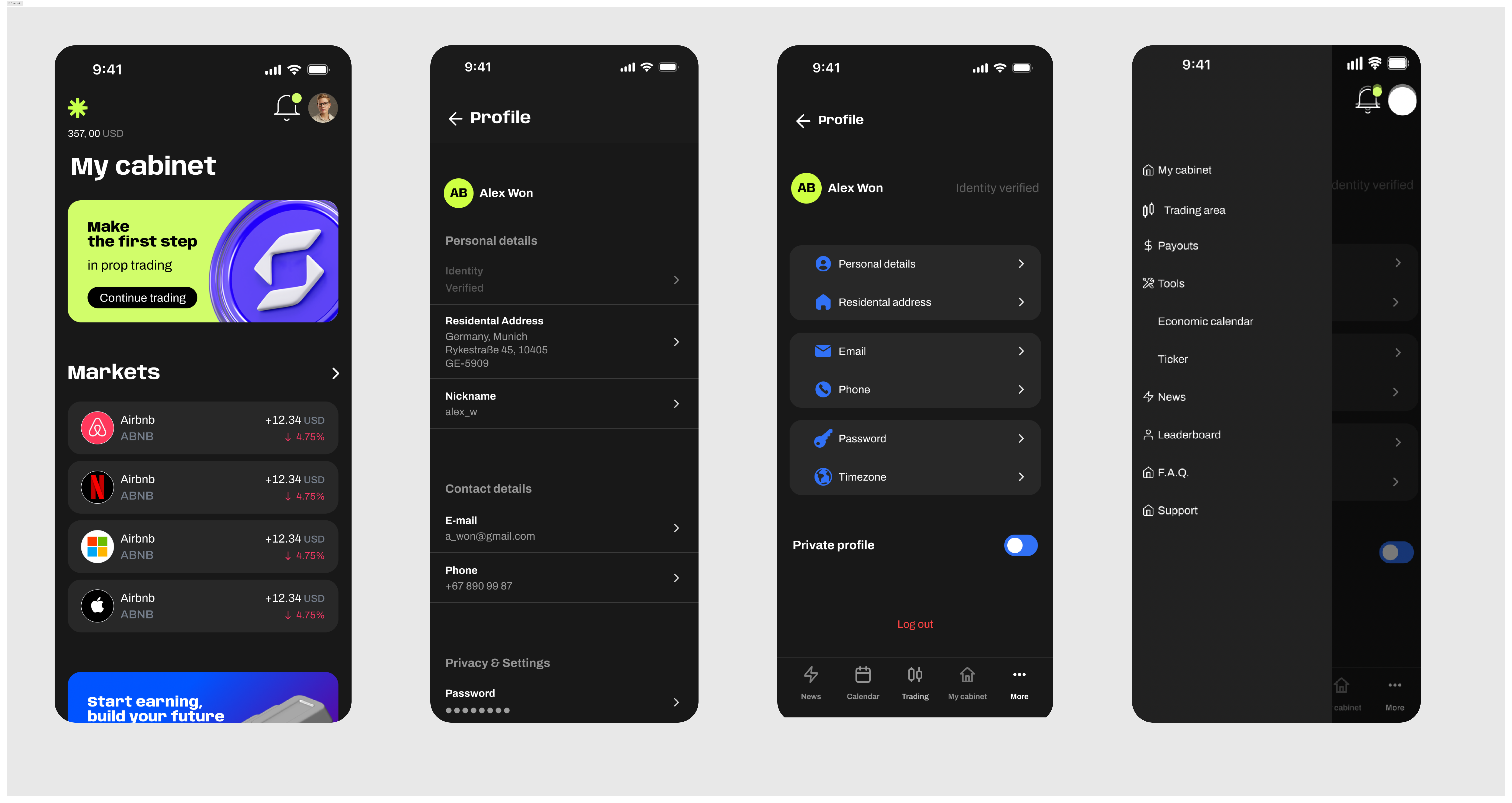
Amega Proprietary Trading main concept screen

Product Context

What proprietary trading is — and why clarity matters

Proprietary trading products are different from classic brokerage platforms. A user does not simply open an account and start trading. They enter a challenge or evaluation phase, where they must follow specific trading rules, reach a profit target, and stay within drawdown limits.

If a trader passes the challenge, they may receive access to a funded account and later request payouts based on their performance. Because the model depends on rules, risk, and trust, the interface has to explain the conditions clearly from the first interaction.

The product needed to make the core logic visible: what stage the trader is in, what rules apply, how close they are to the profit target, how much drawdown remains, and what action should happen next.

Amega prop trading product context

The concept needed to surface the challenge model — evaluation phase, trading rules, drawdown, and profit target — from the very first screen.


Creation Process

How the concept was created from scratch

The work was structured as a research-to-concept process. Before designing the final high-fidelity screens, I moved through business requirements, competitor analysis, user recruitment, interviews, insight synthesis, low-fidelity drafts, and early usability checks.

01

Business requirements

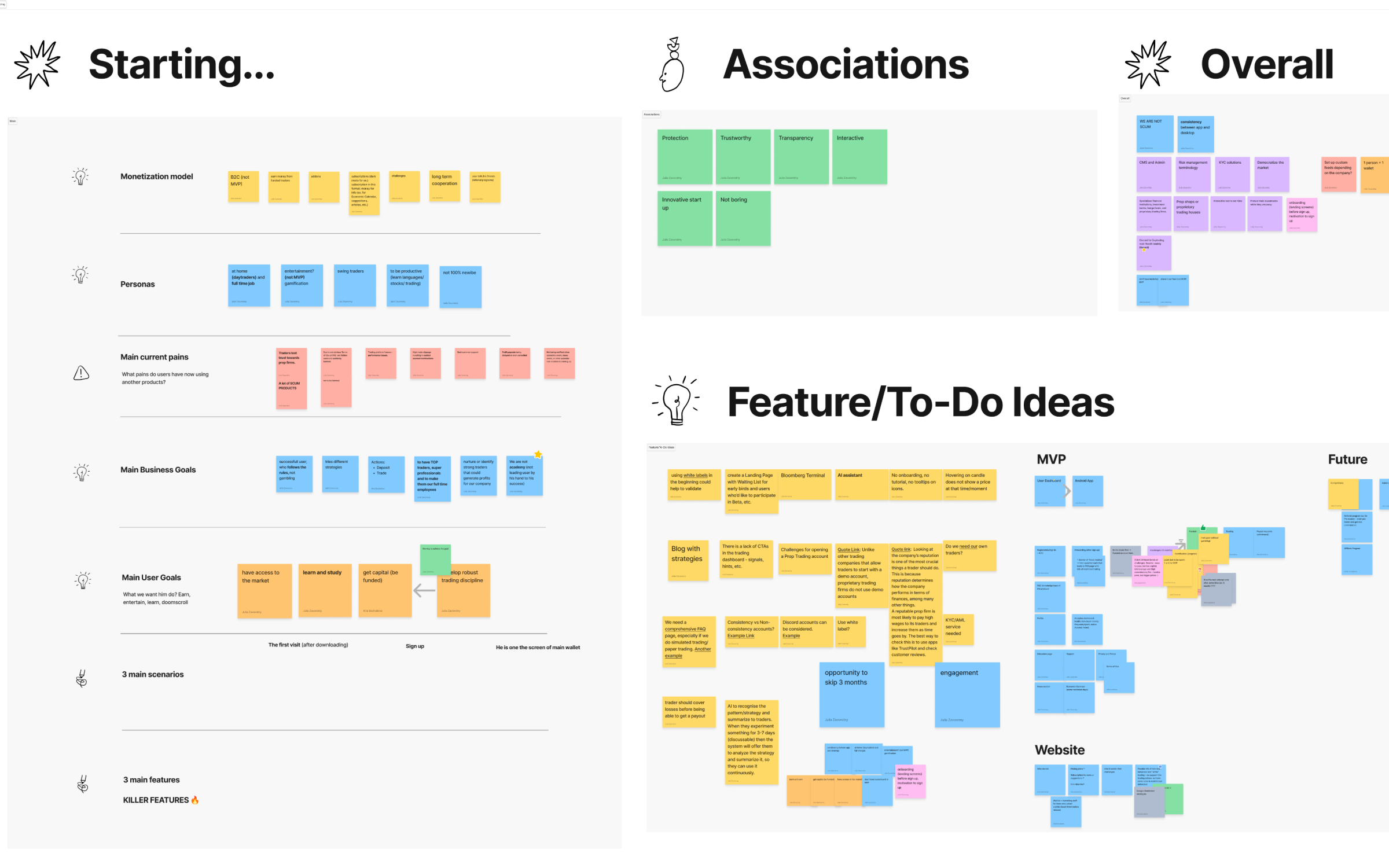
I started by collecting and structuring business requirements together with the product manager and stakeholders. The goal was to understand the product model, business logic, target audience, MVP scope, and what the first version of the proprietary trading product needed to explain.

Business requirements

Business requirements helped define the first product logic, MVP scope, and core user scenarios.

02

Competitor research and benchmarking

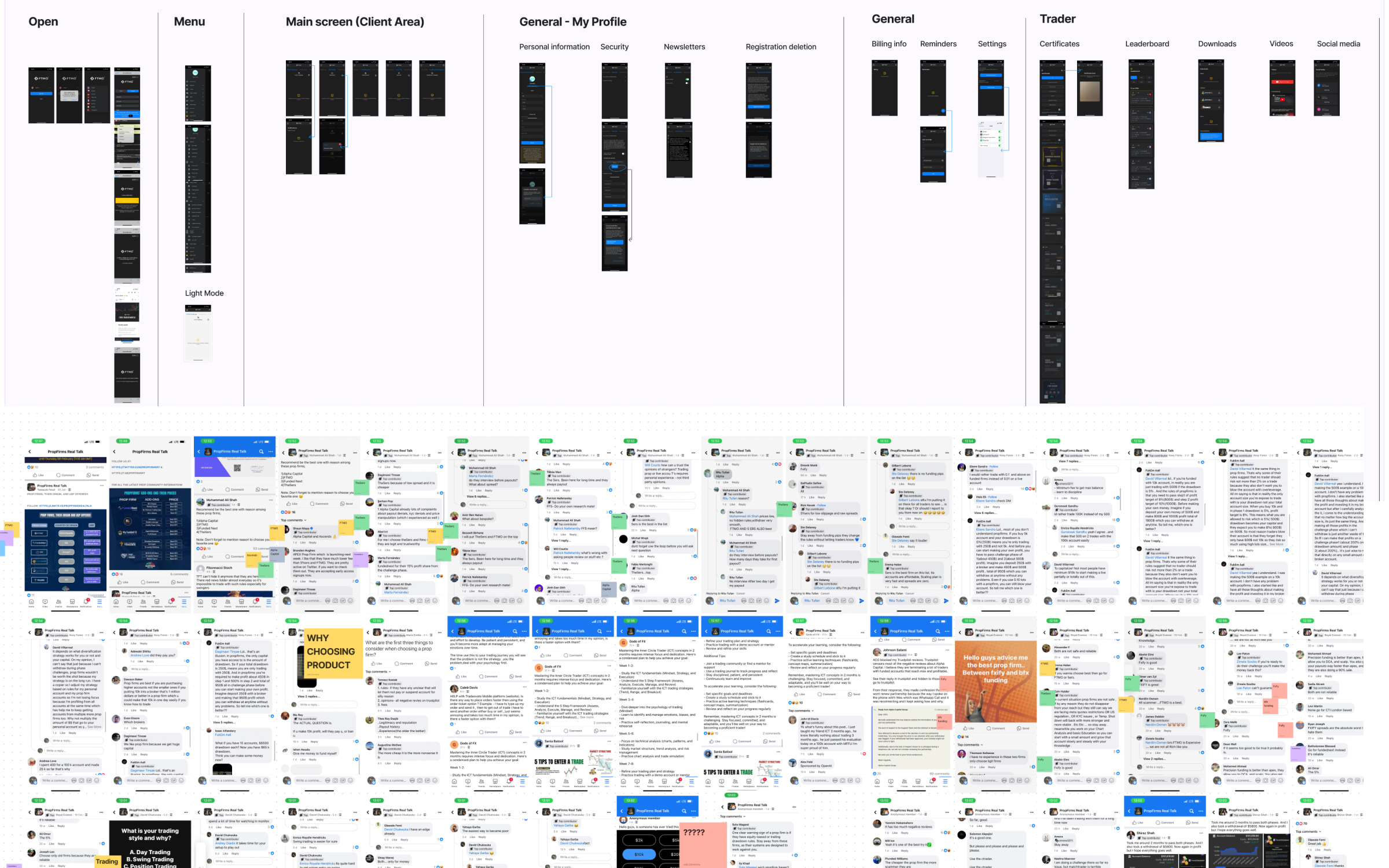
I studied similar proprietary trading products, challenge flows, trader dashboards, pricing models, rule explanations, funded account logic, and payout communication.

The research included competitor analysis, benchmarking, and review mining: I looked at what users praised, what confused them, what created distrust, and which weak points appeared repeatedly in competitor feedback.

Competitor research and analysis

Competitor research included product flows, weak points, strengths, pricing models, and user reviews.

03

Finding relevant respondents

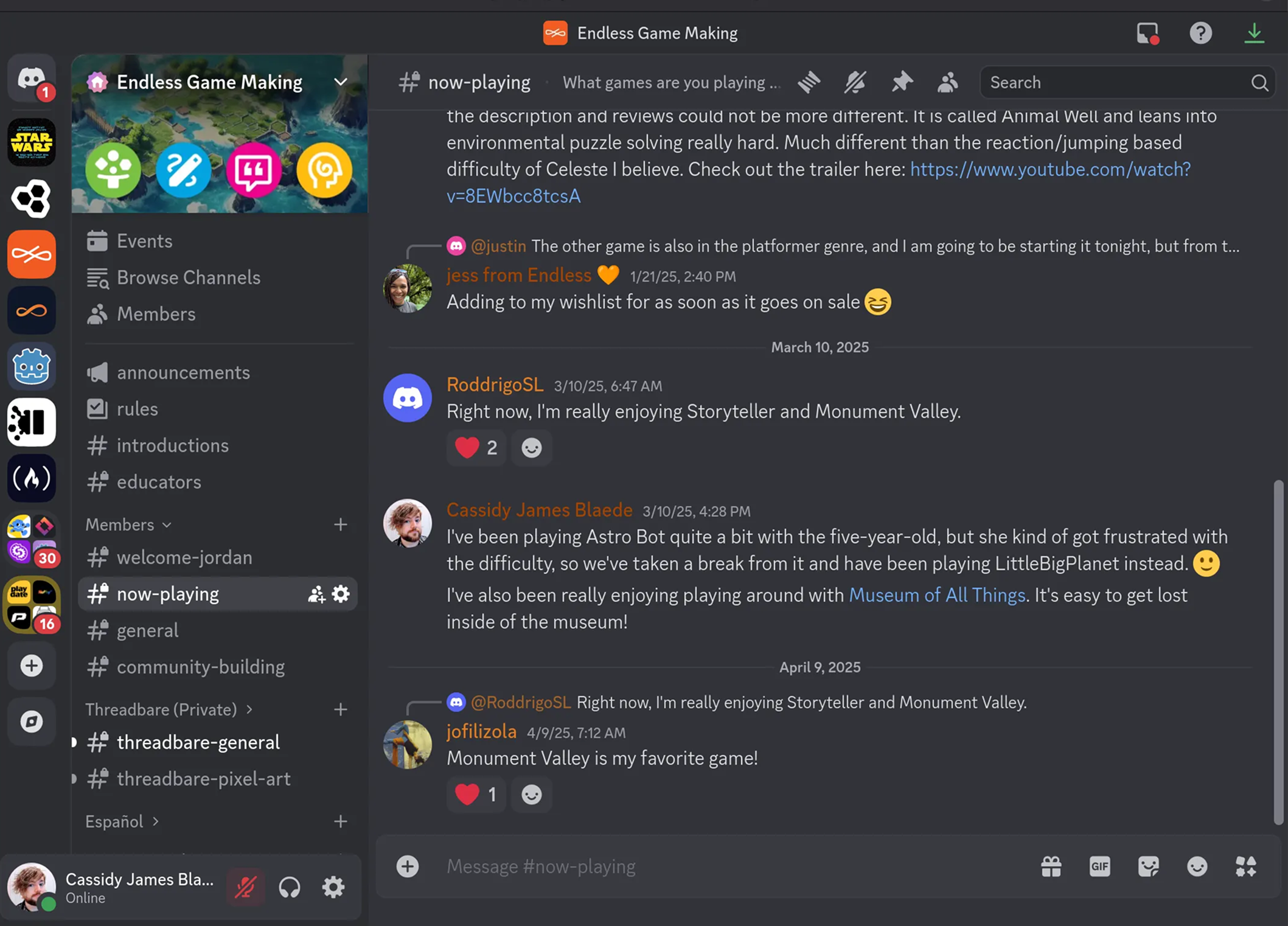
To reach users with relevant experience, I searched for respondents in Discord communities, Facebook groups, Telegram channels, trading communities, messengers, and other online spaces where traders discussed proprietary trading products.

The goal was to speak with people who already understood similar products or had experience with trading challenges, funded accounts, and trader evaluation platforms.

Respondent recruitment

Respondents were recruited from trading communities, Discord, Facebook, Telegram, and other online channels.

04

Interview script

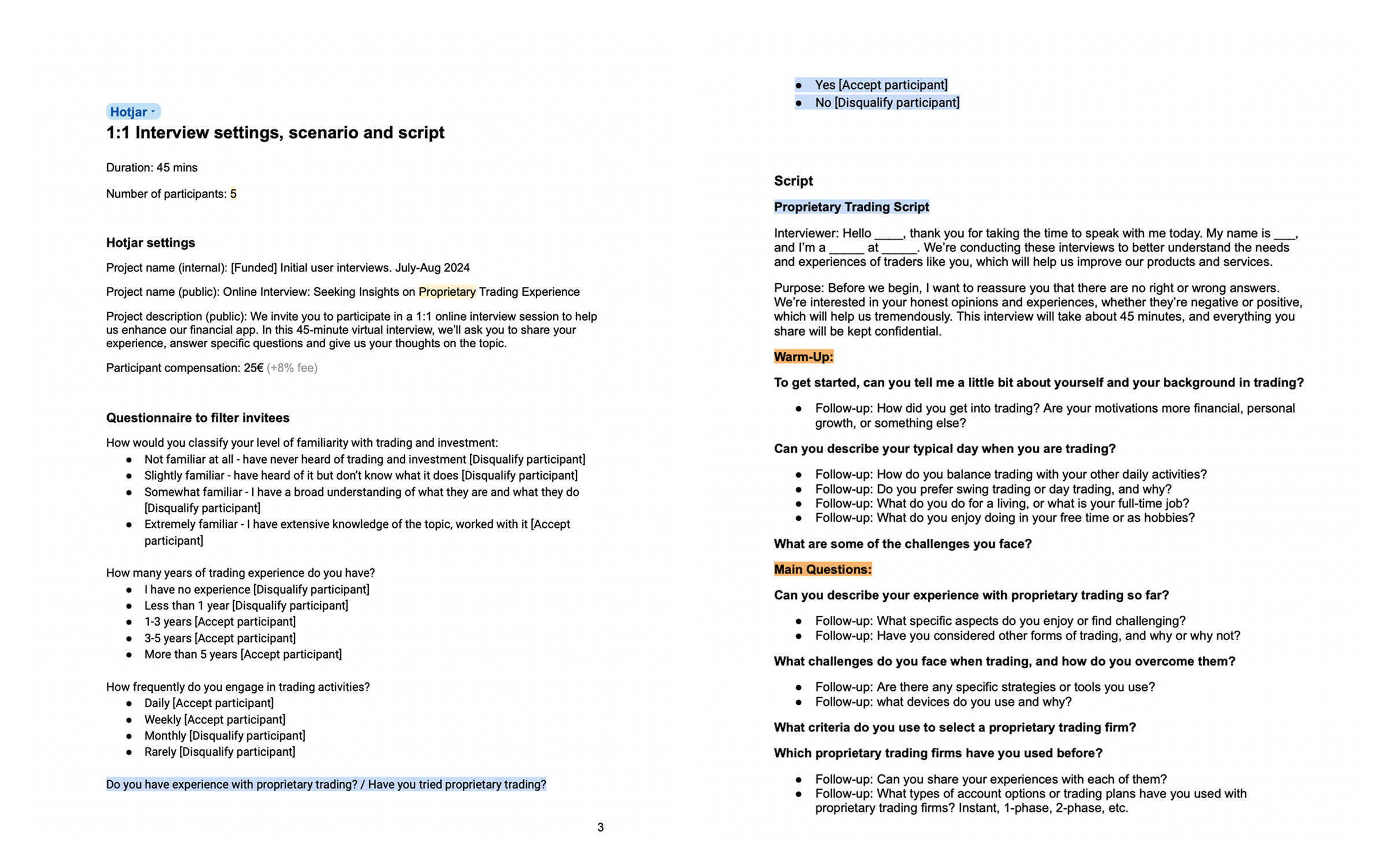
Before conducting interviews, I prepared a research script focused on trader motivation, trust, competitor experience, challenge rules, payout concerns, risk limits, and what information users expected to see before joining a challenge.

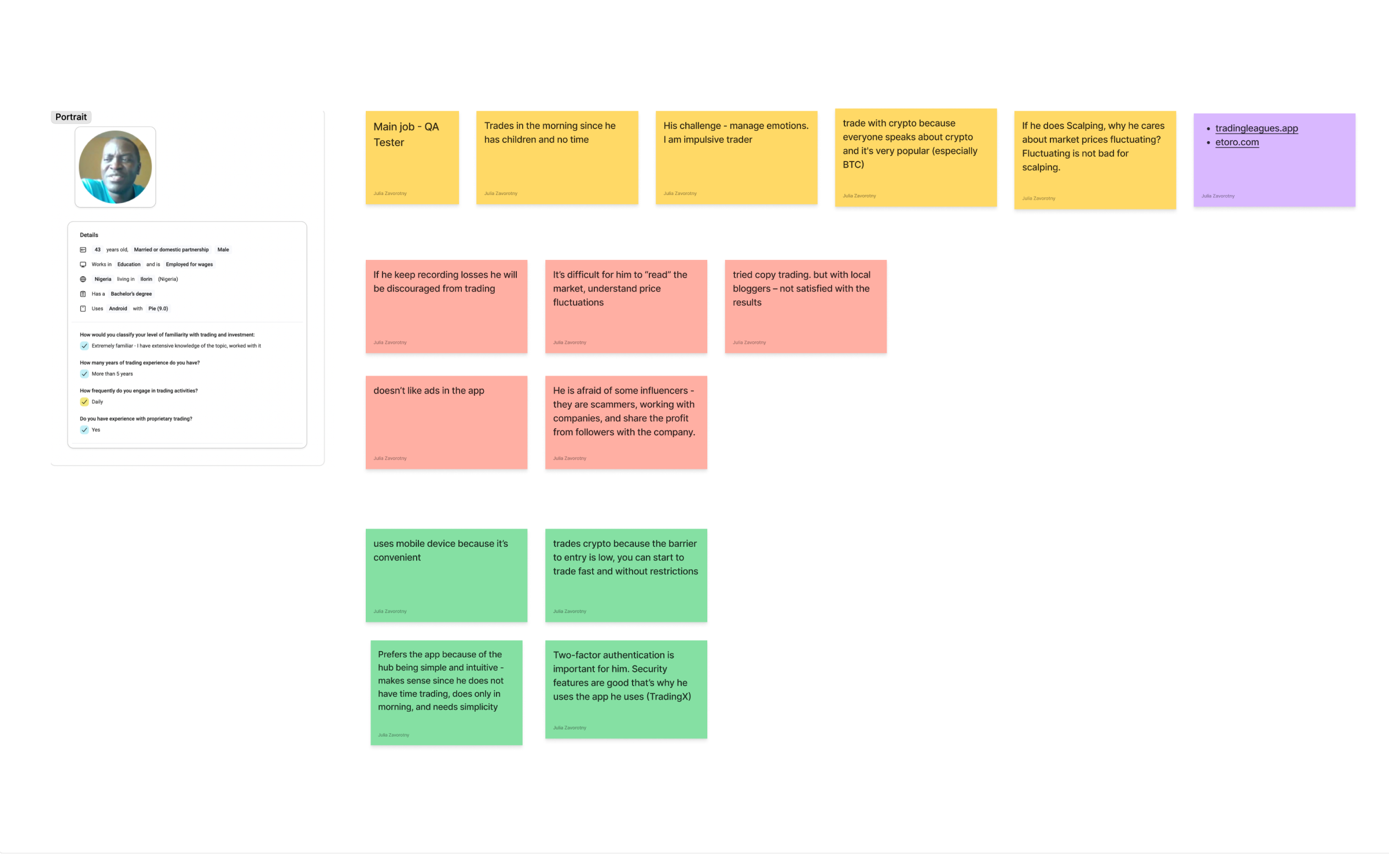
Interview script

The script helped structure conversations around trust, rules, risk, payouts, and product expectations.

05

Interviews and insight analysis

I conducted user interviews and analyzed the results to identify repeated patterns. The main insights were connected to trust, rule transparency, progress visibility, payout expectations, account status, and fear of hidden conditions.

Interview insights analysis

Interview analysis helped translate user concerns into product principles and interface priorities.

06

Low-fidelity drafts

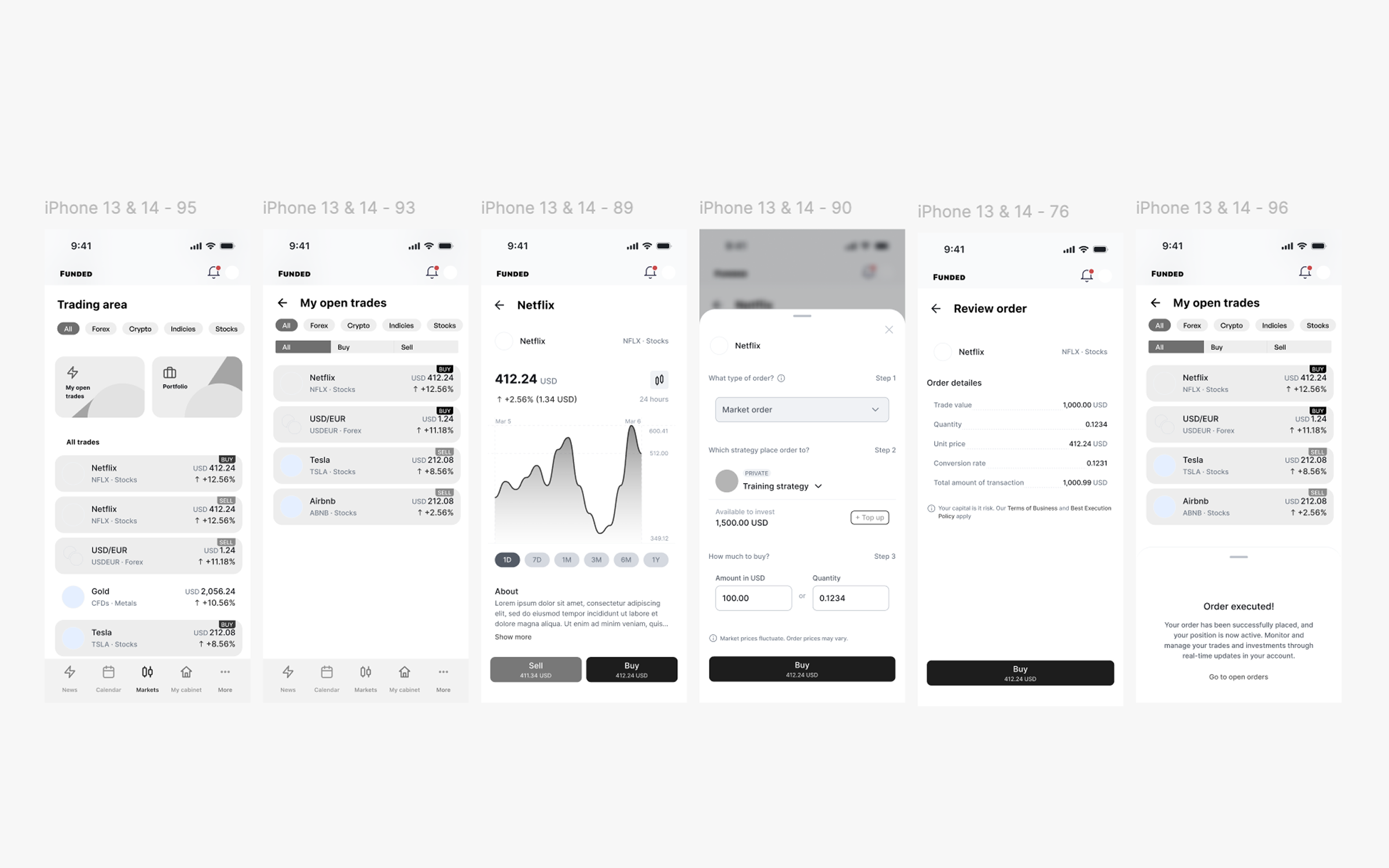
Based on business requirements, competitor research, and interview insights, I created rough low-fidelity drafts to explore the product structure, main dashboard logic, challenge progress, and how rules and risk limits could be presented.

Low-fidelity drafts

Low-fidelity drafts helped test the structure before moving into visual design.

07

High-fidelity concept

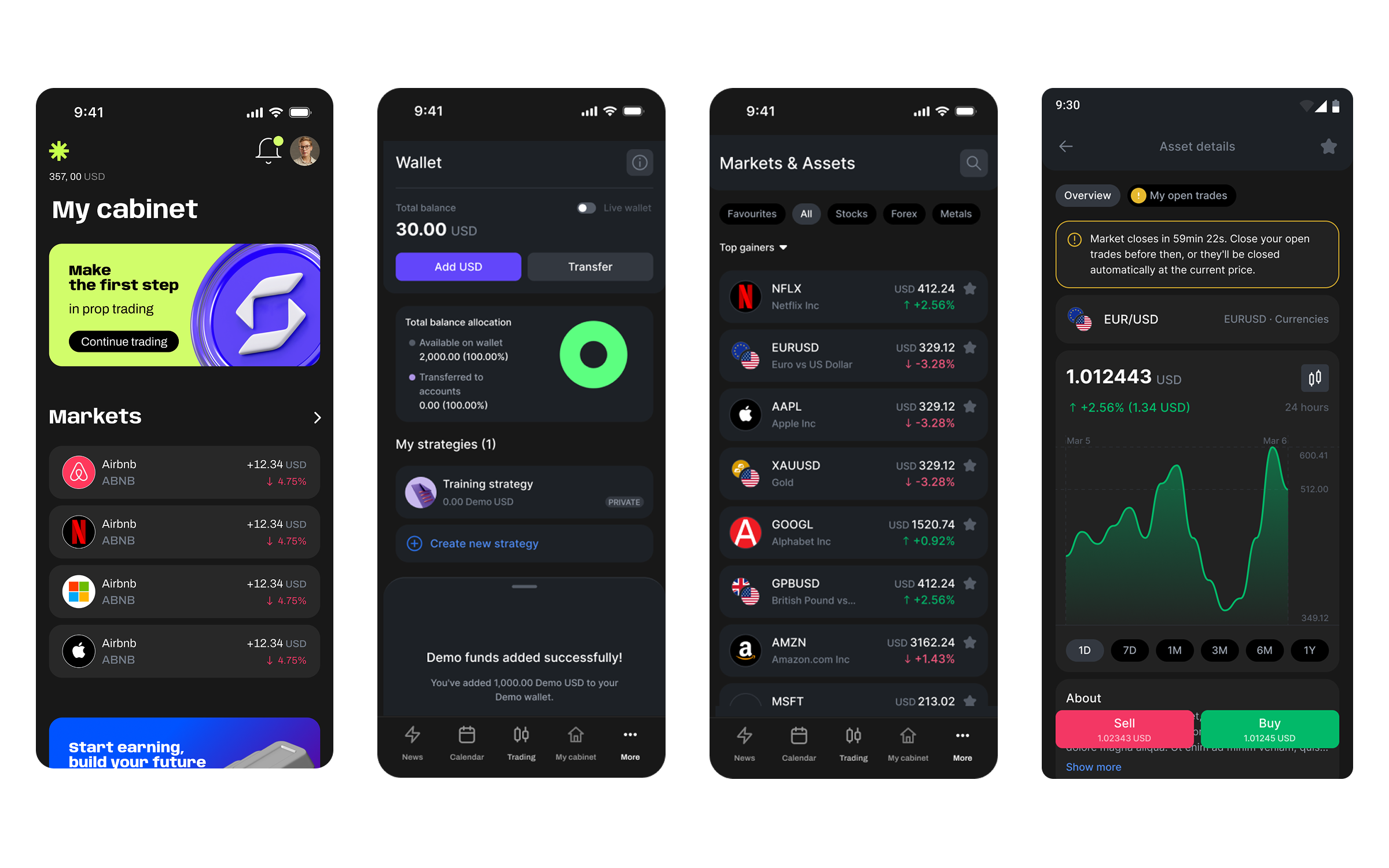
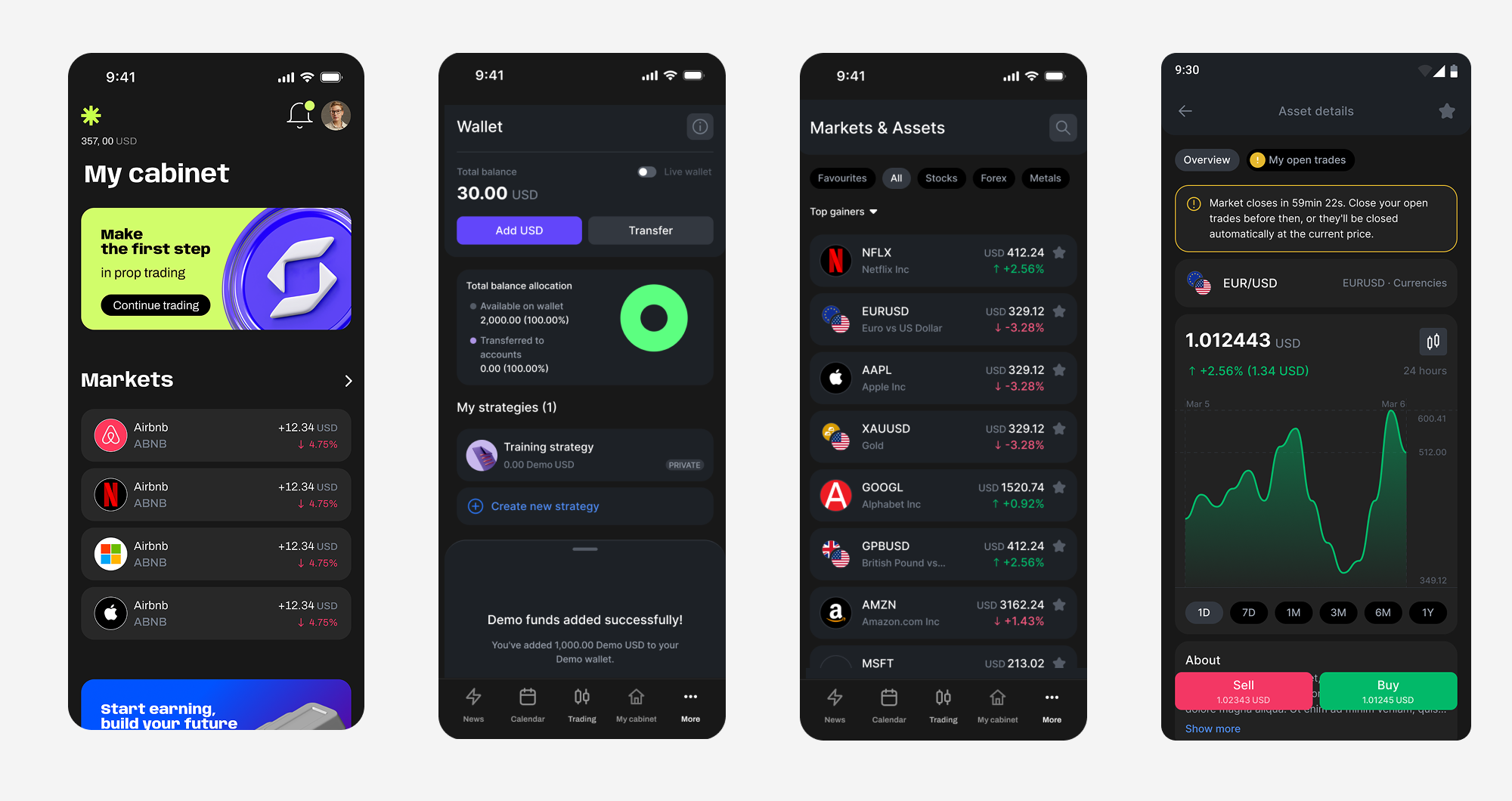
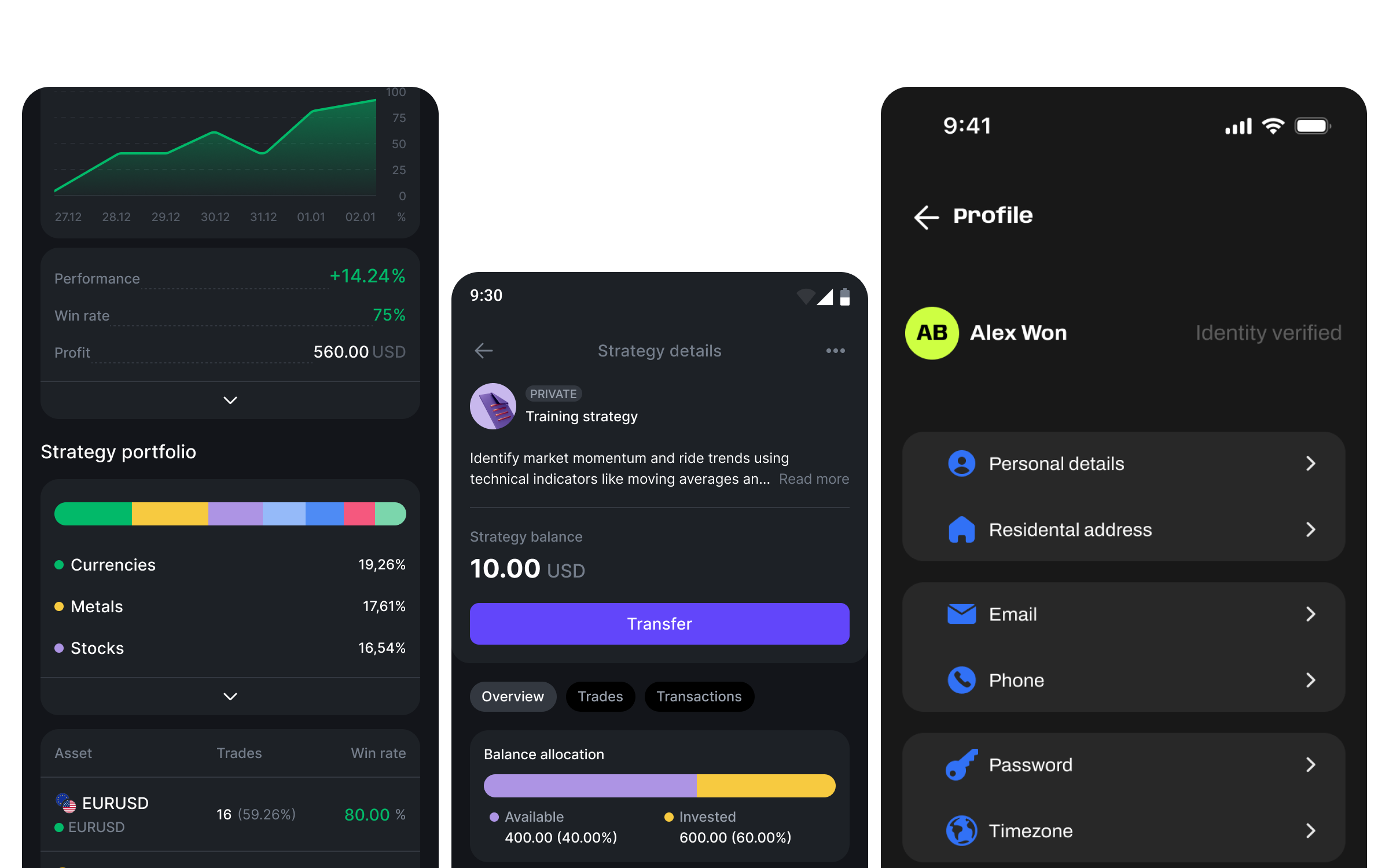
The final stage was a high-fidelity concept: a main screen and several MVP-level screens showing how the proprietary trading experience could present challenge progress, trader performance, account state, profit target, drawdown, and next actions.

High-fidelity concept screens

The high-fidelity concept showed the first visual direction for the product experience.

08

Usability testing with users of similar products

I tested early ideas with users of similar proprietary trading and trading platforms. The goal was to check whether the concept structure, rules, progress indicators, and main dashboard logic were understandable before moving further into product development.

Usability testing

Early usability checks helped validate whether traders could understand the concept logic and key information.


Result Design

An MVP concept for a transparent prop trading experience

The outcome was an MVP-level concept for a new proprietary trading product. It included low-fidelity drafts, a high-fidelity main screen, and several early screens that helped the team align around the product direction.

The concept translated business requirements, competitor research, review analysis, user interviews, and early usability checks into a clearer structure for challenge progress, trading rules, account status, drawdown, profit targets, and trader performance.

Amega prop trading result concept

The MVP concept gave the team a clear visual direction — from challenge entry through funded account access.


Reflection

In prop trading, trust starts before the first trade

This project showed that a proprietary trading product cannot rely only on an attractive dashboard. Traders need to understand the model before they commit: what the challenge is, which rules apply, how progress is measured, what can cause failure, and how payouts work.

The most important part of the work was not jumping directly into UI. It was building the concept from research: business requirements, competitor analysis, review mining, respondent recruitment, interviews, insight synthesis, low-fidelity drafts, and usability checks.

The strongest design lesson was that early-stage fintech products need clarity before polish. When the product is built around money, risk, and performance, the first design task is to make the logic understandable.