B2C · FinTech · Trading Platform · Web & Mobile

Designing trusted account flows for retail traders

Amega Client Area ia a live fintech product foSr retail traders managing accounts, wallets, balances, KYC, deposits, withdrawals, transfers, and transaction history across web and mobile. My work focused on simplifying high-trust financial flows, clarifying account states, and helping users understand the next available action at every step.

Role
Product Designer
Domain
FinTech / Trading / Brokerage
Platform
Web & Mobile
Team
PM, designers, developers, QA, stakeholders, business teams
Scope
Client area, onboarding, KYC, wallet, transfers, exchange, crypto, trading accounts
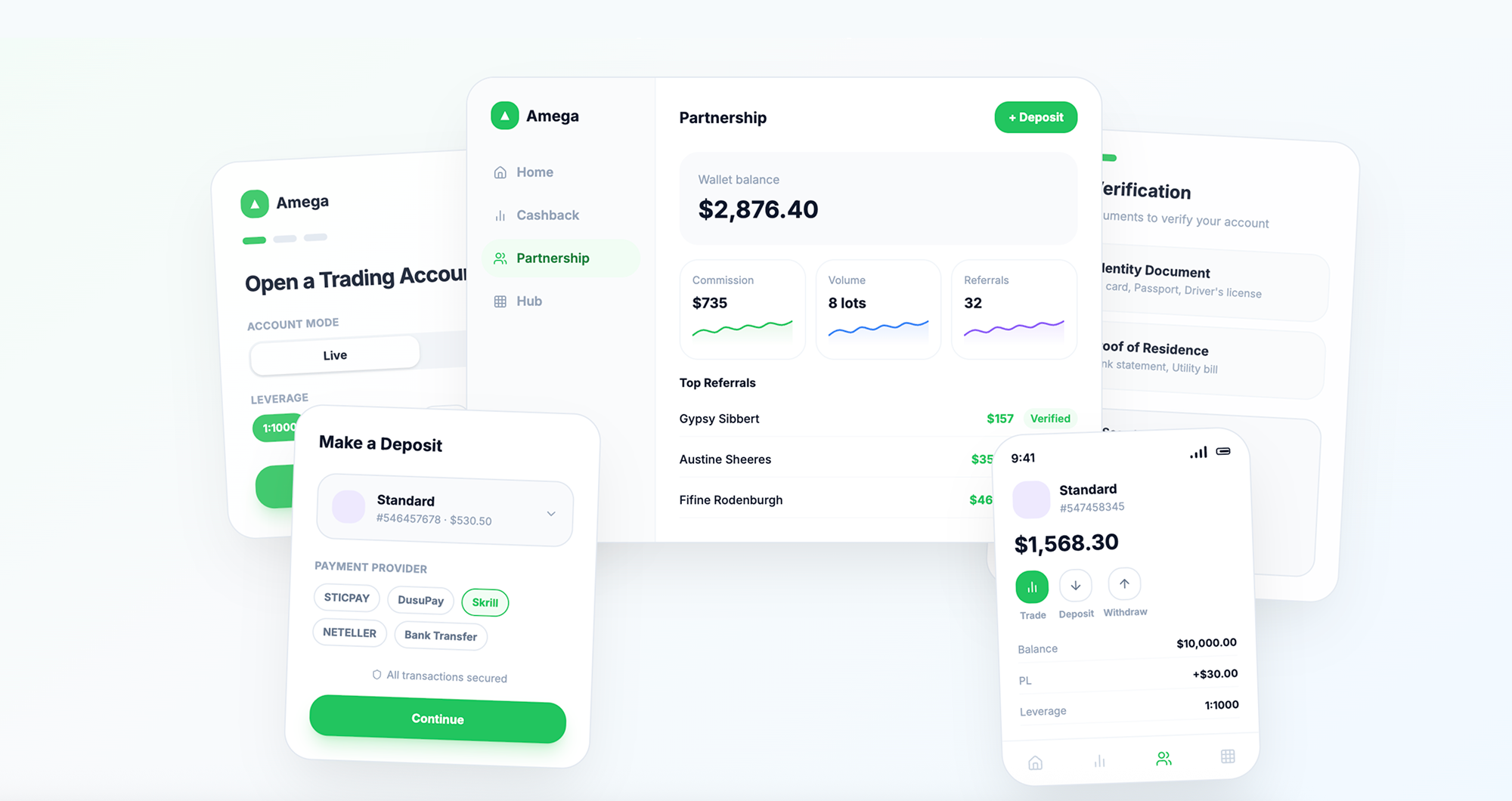
Amega Client Area

Product Context

A trading account hub for high-trust financial flows

The client area was the operational center of the trading product: a place where users registered, verified identity, managed trading accounts, moved funds, checked balances, and reviewed transaction history.

My work focused on making high-trust financial flows clearer across web and mobile — helping users understand what is available, what is pending, what requires action, and how each operation affects their account.

Amega product context

One account environment connecting access, compliance, trading data, wallet operations, and transaction history.


Product Screens

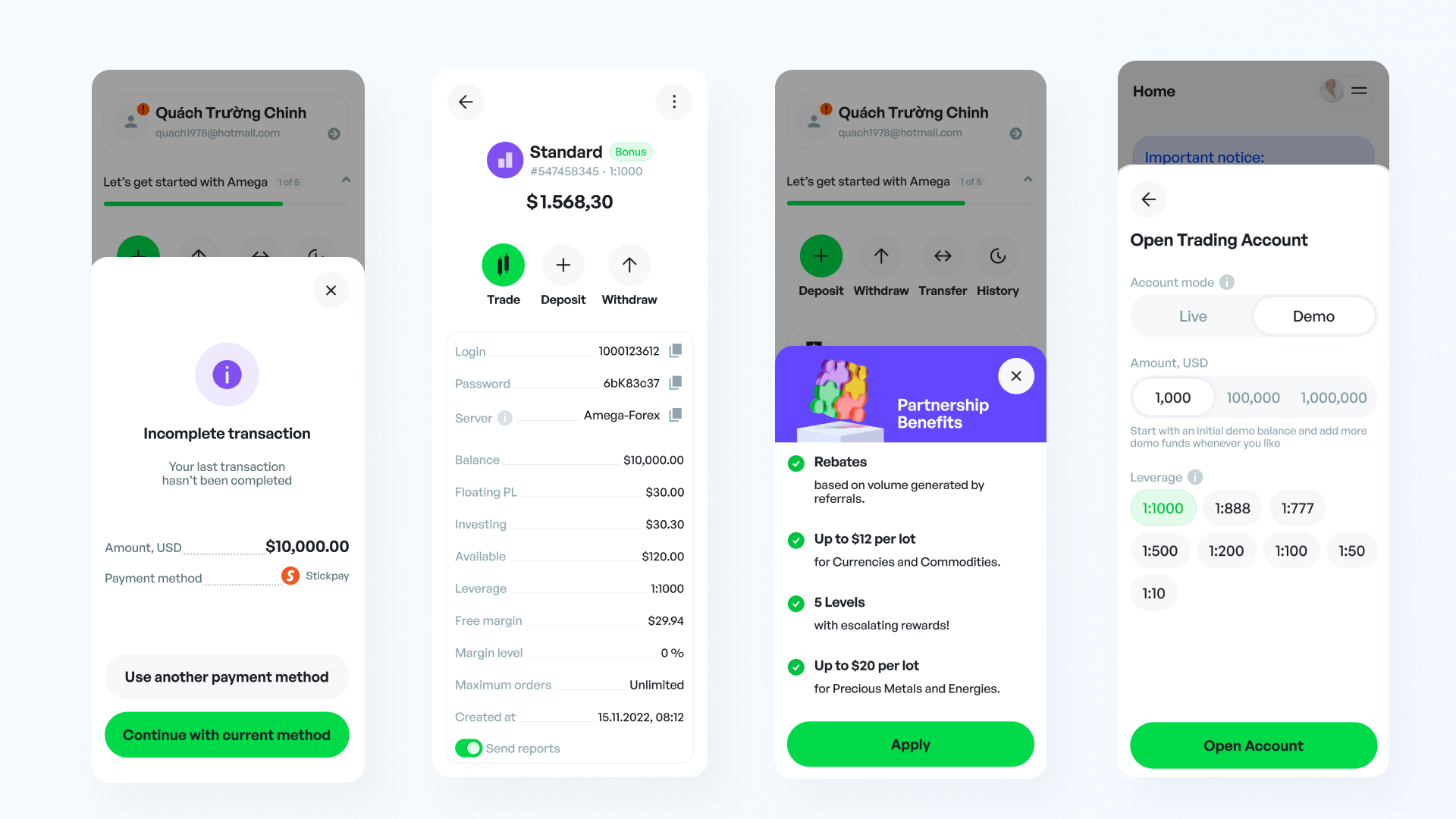
Core flows for a high-trust trading account

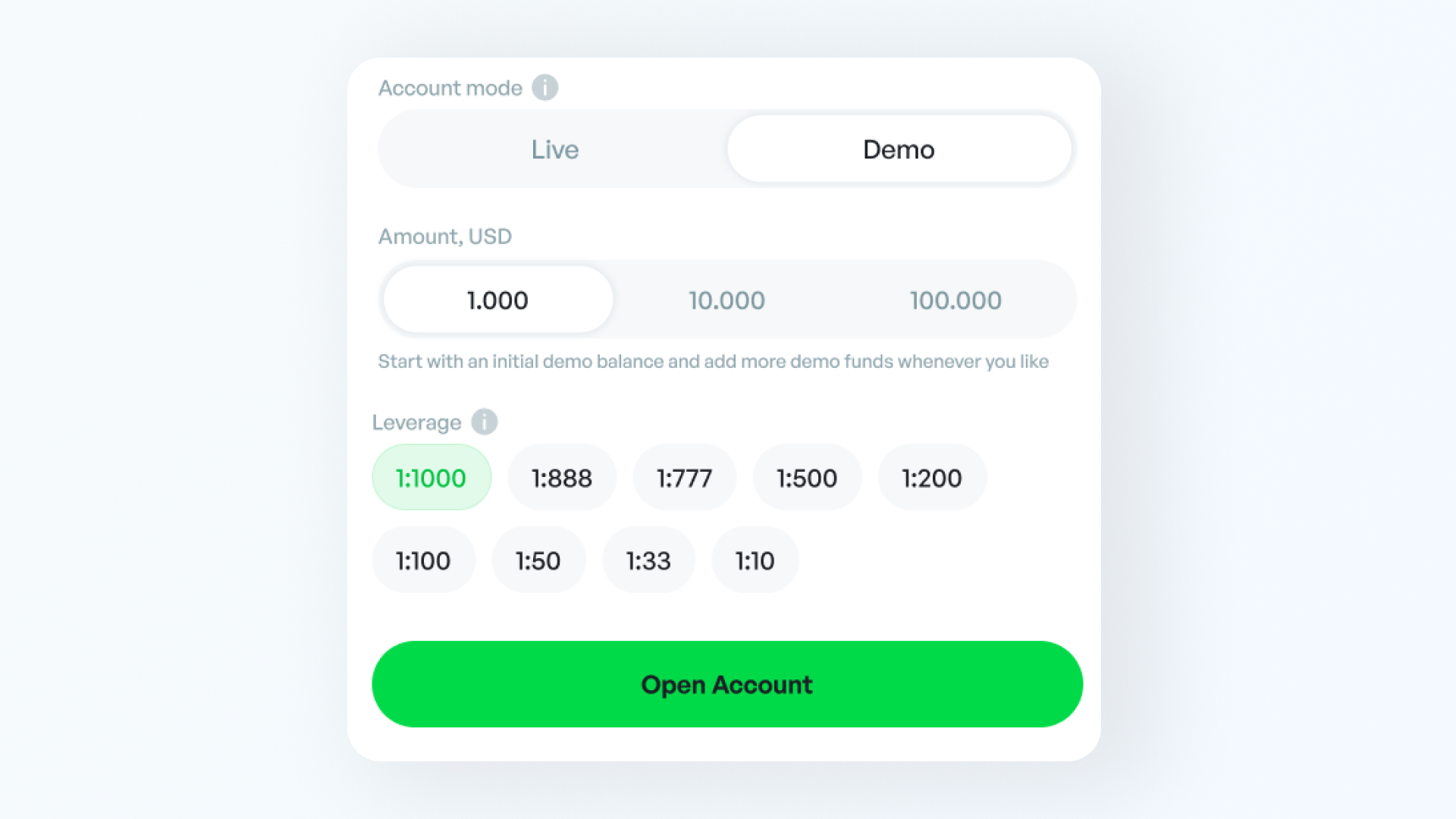
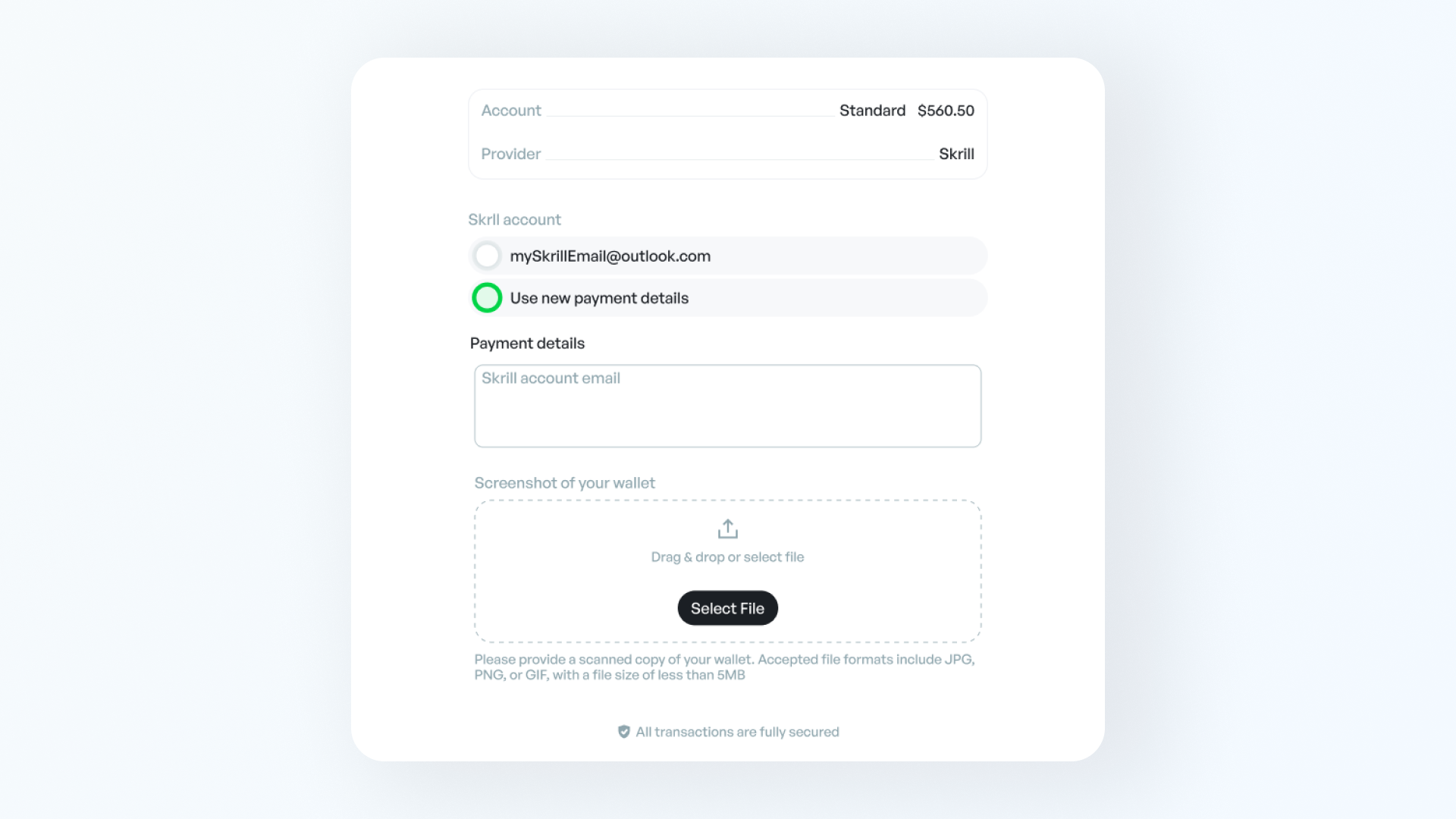
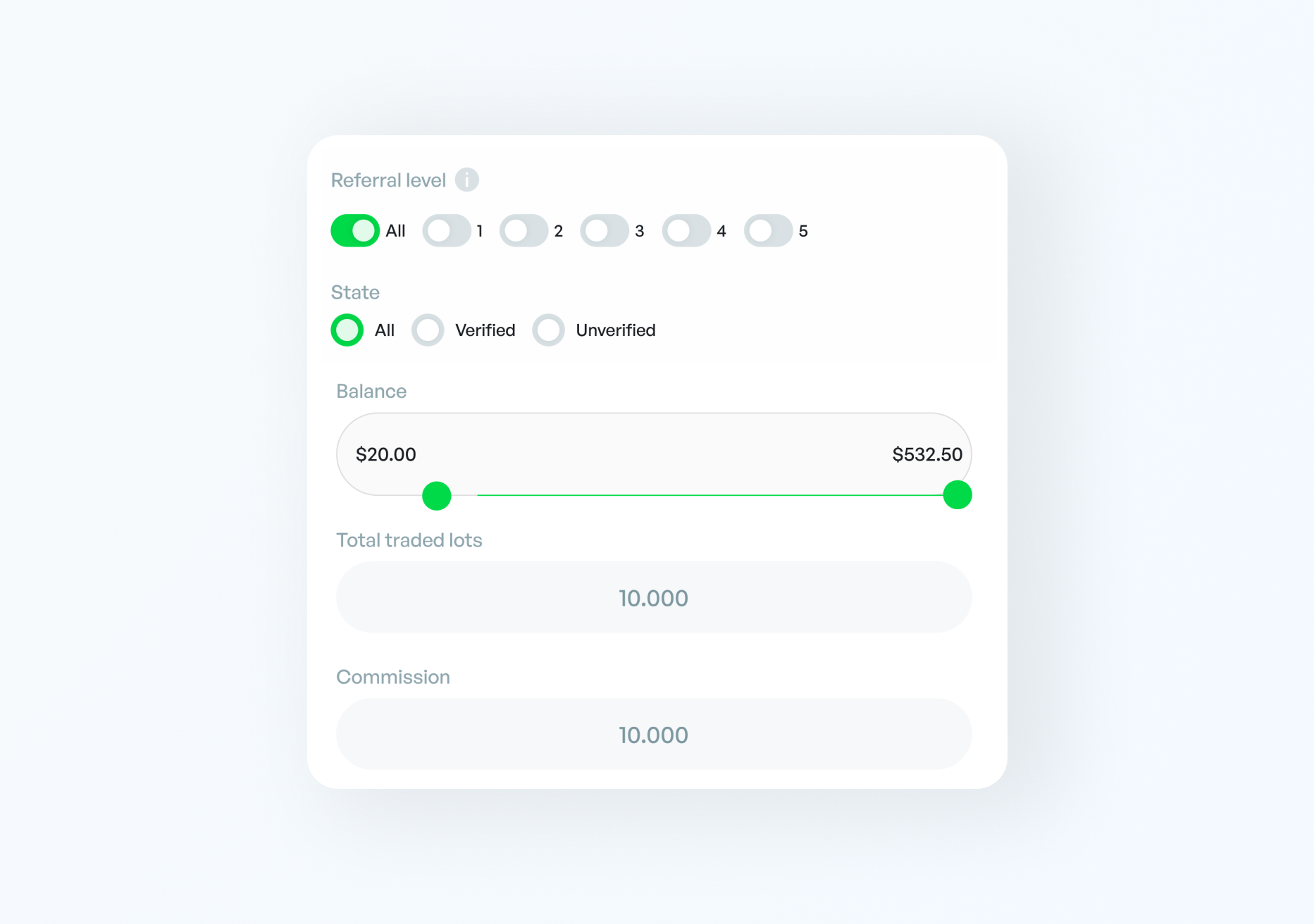
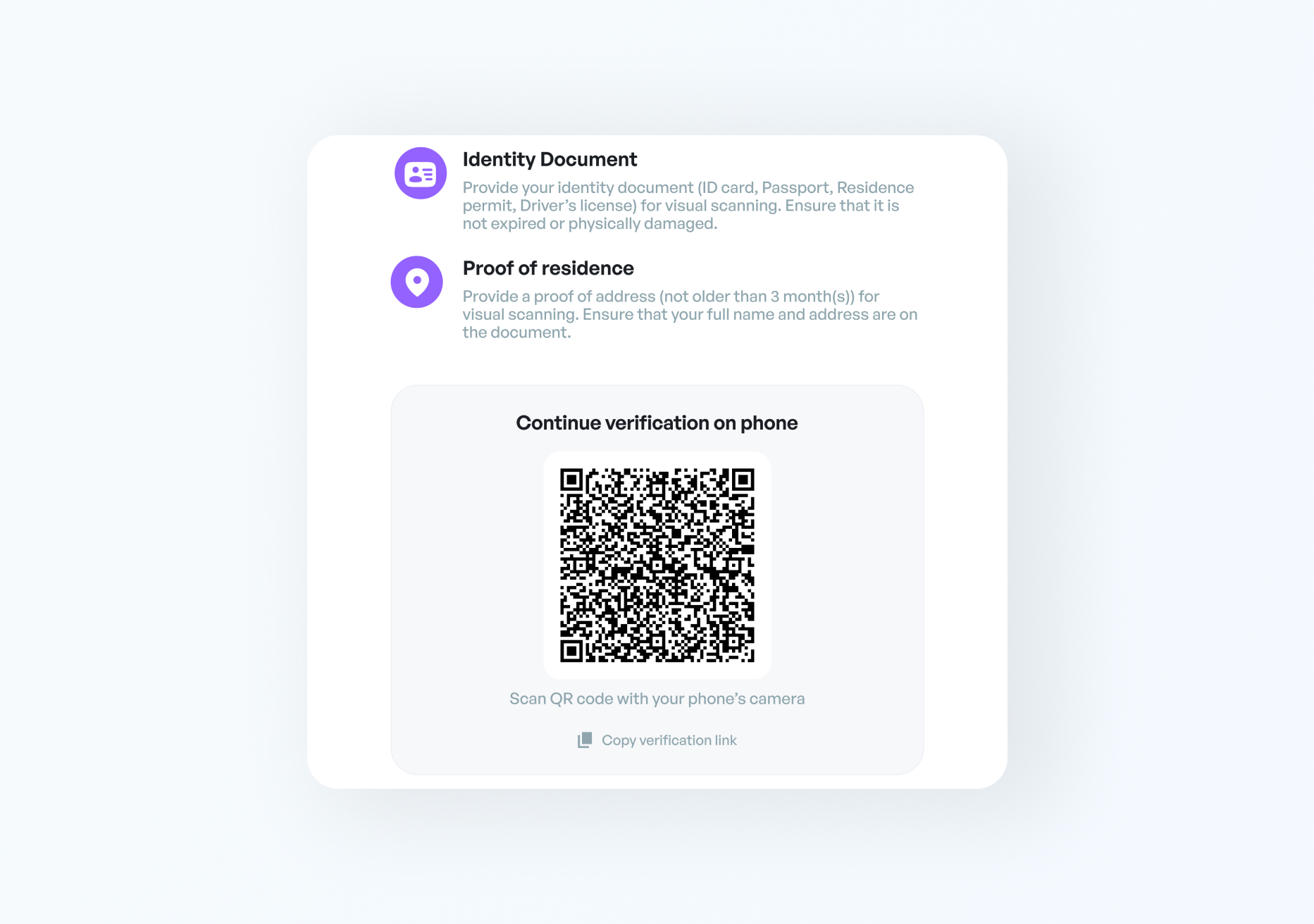
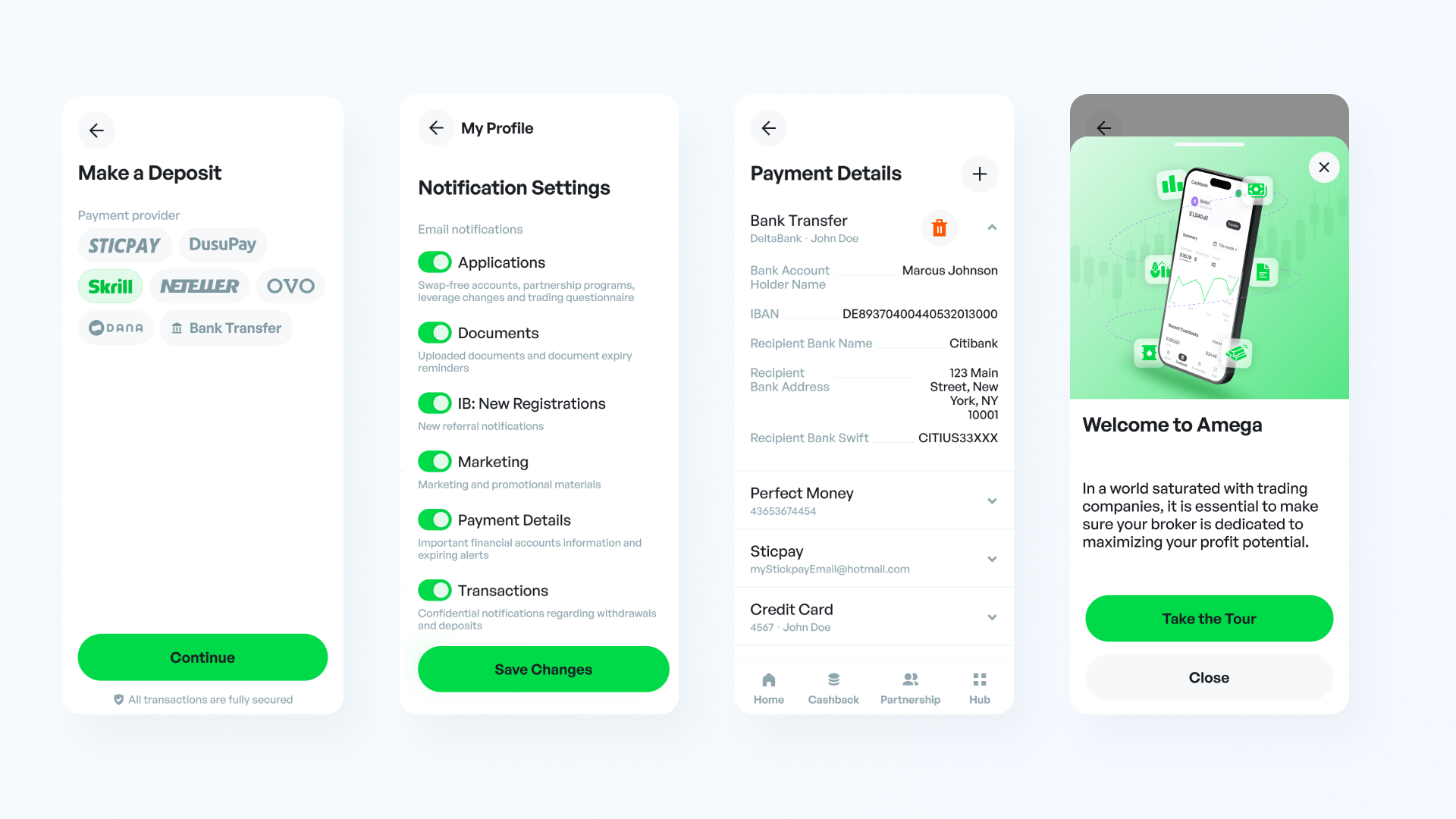
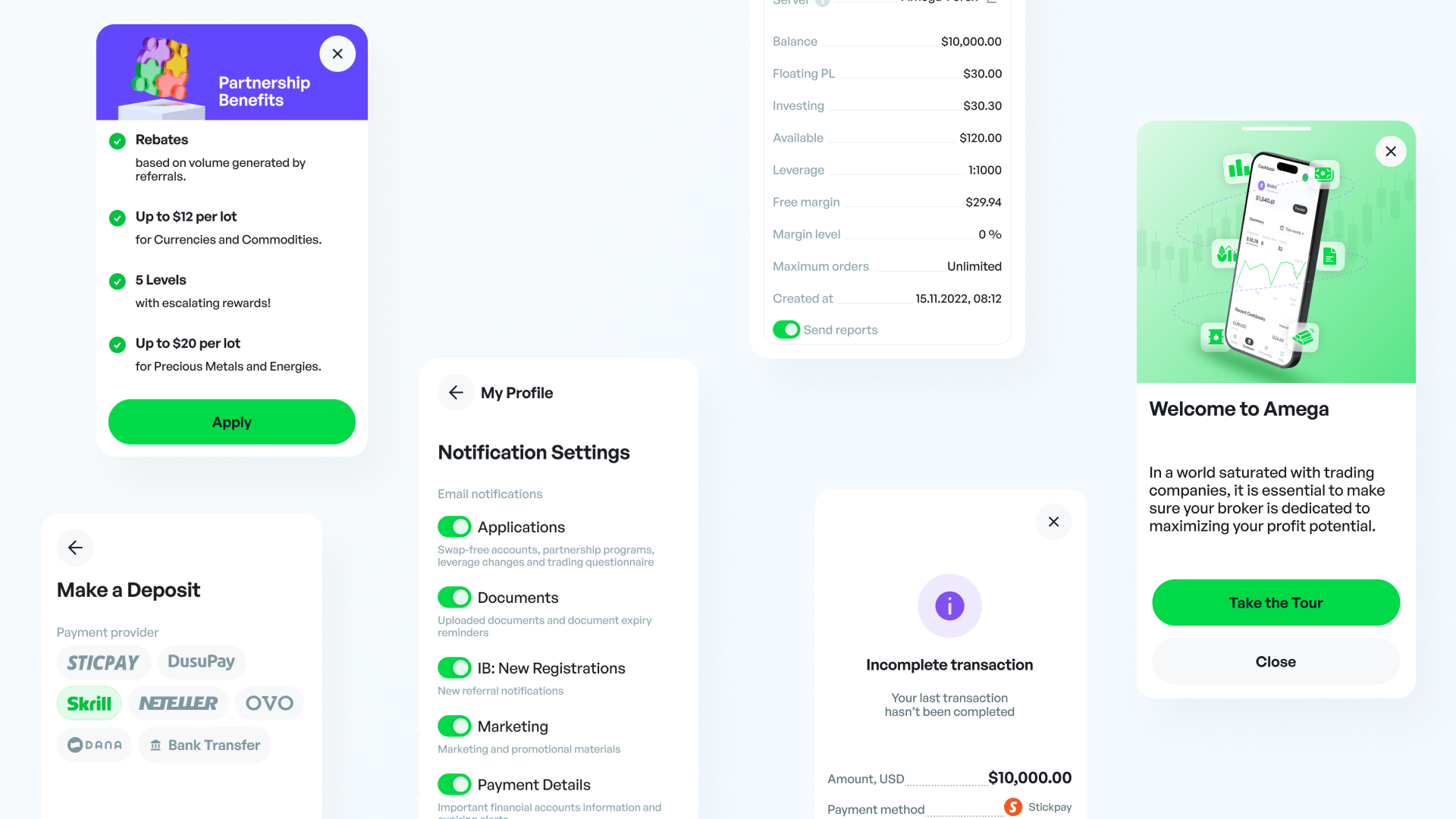
Selected screens showing how users verify identity, manage accounts, move funds, track transactions, and access trading-related information across web and mobile.


Product Scope

Working across the key areas of a trader's personal account

My work covered multiple parts of the client area ecosystem. Some scenarios were related to account access and verification, while others focused on money movement, trading account management, transaction visibility, and web/mobile consistency.

Onboarding and authorization
Designed entry flows for account access, registration, login, and early account setup.
KYC and verification
Worked on identity verification states, account status, required steps, and compliance-related user flows.
Wallet and balances
Designed wallet-related interfaces for available balance, account balance, transaction state, and financial overview.
Deposits and withdrawals
Worked on flows for funding accounts, requesting withdrawals, payment methods, pending transactions, and related states.
Transfers and exchange
Designed scenarios for internal transfers, conversion, exchange, fiat and crypto operations, and currency or asset selection.
Trading account management
Worked with trading account surfaces, account details, currency lists, trading-related data, chart areas, and account activity.

Design Focus

Making financial flows clear, predictable, and safe

The design work focused on building and supporting product flows inside an existing fintech platform. The goal was to make everyday trader operations structured, predictable, and consistent across web and mobile.

Onboarding and KYC

I designed flows for account access, identity verification, account status, and KYC-related steps. These screens needed to communicate requirements, progress, and available next actions clearly. Verification is a high-attention moment — traders need to know where they are in the process, what is required, and what becomes available once a step is complete.

KYC and onboarding flows

KYC and onboarding screens communicated verification requirements, progress, and the steps needed to unlock trading and financial operations.

Wallet and money movement

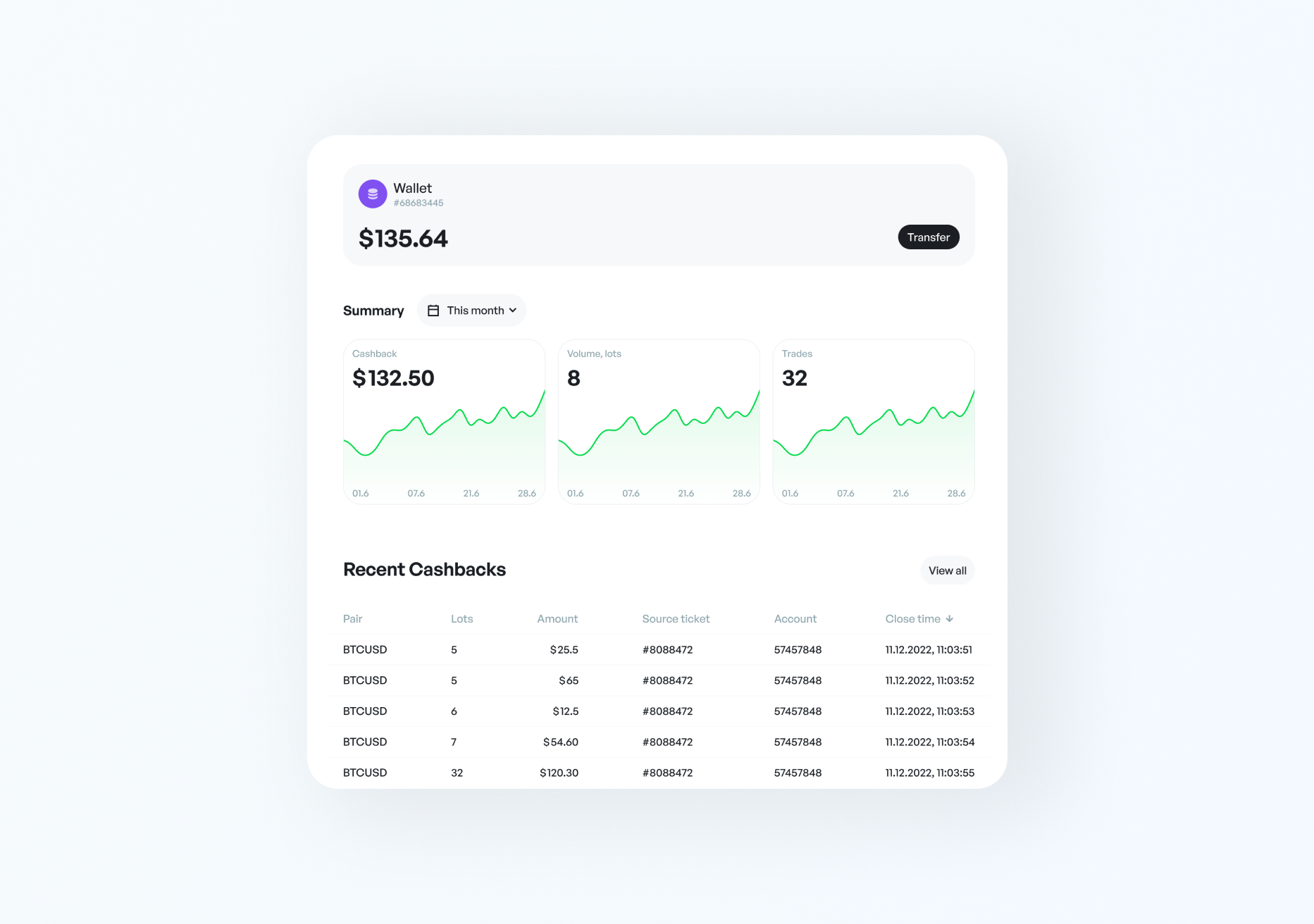
I worked on wallet-related scenarios, including deposits, withdrawals, internal transfers, payment methods, transaction states, fiat and crypto operations, exchange, conversion, and balance visibility. Each financial flow required consistent state handling — pending, processing, completed, and failed transaction states all needed to be clearly communicated at each step.

Wallet and financial flows

Wallet flows covered deposits, withdrawals, transfers, exchange, and transaction states across fiat and crypto operations.

Web and mobile scenarios

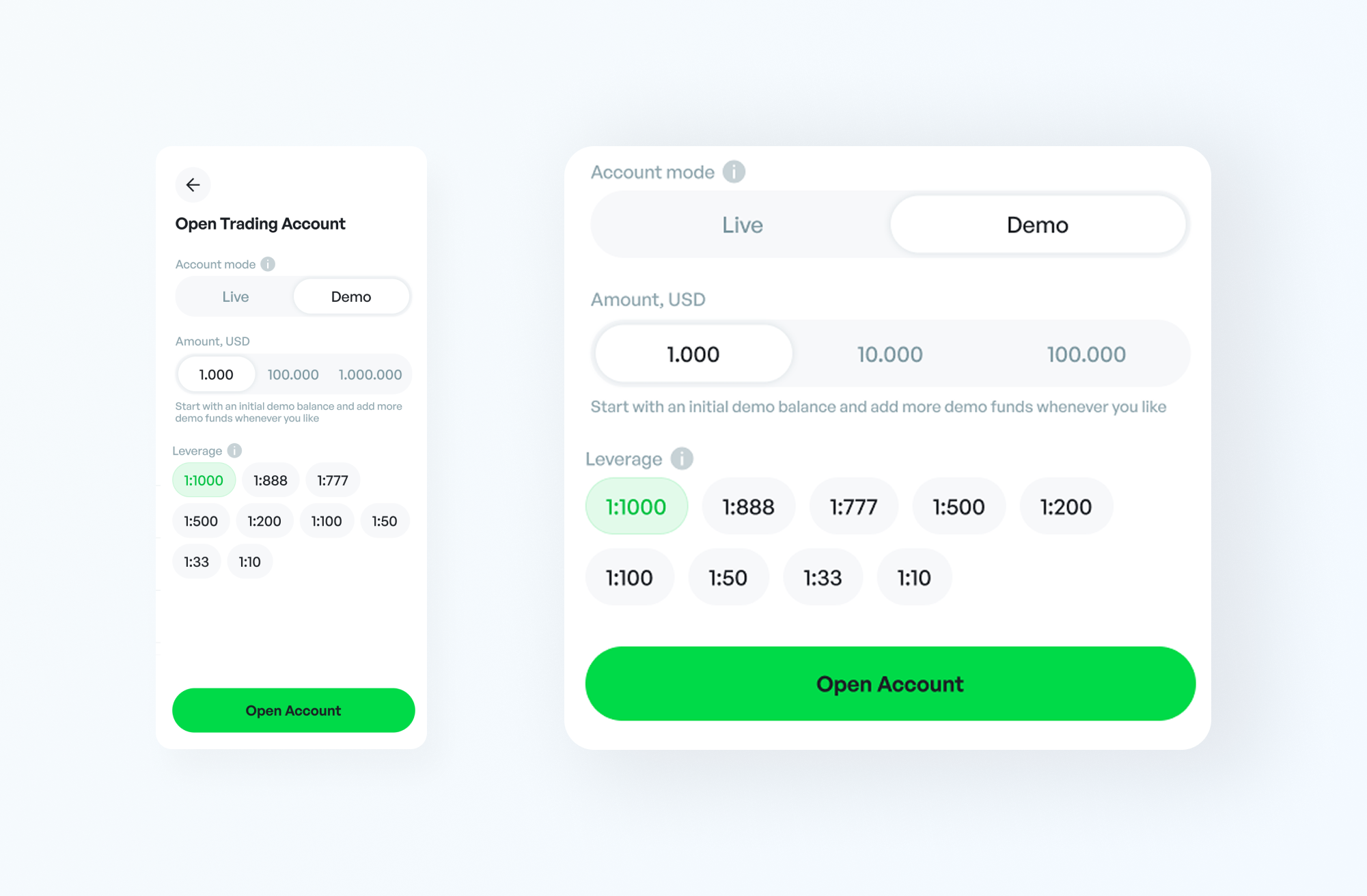
I designed across desktop and mobile contexts so traders could manage accounts, check balances, complete financial actions, and review transaction states without losing context. Core operations — deposits, withdrawals, KYC, internal transfers, and account access — needed to work coherently across both platforms and feel like part of the same product experience.

Web and mobile client area

Consistent product logic across desktop and mobile kept the trader's account experience coherent across devices.


Result Design

A connected workspace for trader operations

The final work contributed to the ongoing development of the Amega Client Area across web and mobile. The product experience covered the main operational needs of retail traders: onboarding, verification, wallet operations, deposits, withdrawals, transfers, exchange, trading accounts, transaction history, and account management.

Instead of treating each financial operation as an isolated screen, the client area worked as a connected personal account where users could understand their status, manage funds, access trading-related information, and continue their workflow across devices.

Amega Client Area result

The client area brought together account management, wallet operations, KYC, trading accounts, and transaction history in one consistent environment.


Process

How I worked

01
Understand
Studied the existing client area, product logic, trader workflows, financial operations, and technical constraints.
02
Map
Mapped key flows around onboarding, authorization, KYC, wallet, deposits, withdrawals, transfers, exchange, trading accounts, and transaction history.
03
Structure
Defined page hierarchy, account states, transaction states, dashboard logic, and cross-platform patterns.
04
Design
Created web and mobile screens for financial flows, account management, trading account surfaces, and dashboard scenarios.
05
Align
Reviewed flows with PM, developers, QA, and stakeholders to ensure feasibility, consistency, and correct financial logic.
06
Present
Prepared demos, presented design decisions, and supported implementation through product and development cycles.

Outcomes

Product work across the main client-area flows

Client area
Worked on core trader workflows across account management, wallet, transfers, verification, and dashboard experience.
Web + Mobile
Designed financial and trading-related flows across desktop and mobile contexts.
Wallet operations
Created flows for balances, deposits, withdrawals, internal transfers, transaction states, fiat and crypto operations.
KYC and onboarding
Worked on authorization, account setup, verification requirements, statuses, and next-step flows.
Trading surfaces
Designed screens involving trading account data, currency and asset lists, chart areas, and account-related information.
Cross-functional delivery
Collaborated with PM, developers, QA, stakeholders, and business teams through product and development cycles.

Reflection

In trading products, trust depends on visible account states

This project showed how much of fintech UX is built around state, sequence, and confidence. Traders need to understand what is happening with their account, funds, verification, transaction, or trading access before they can act comfortably.

Working on the client area meant designing for many connected layers: onboarding, KYC, wallets, transfers, exchange, deposits, withdrawals, trading accounts, and transaction history. Each flow had to feel like part of the same financial environment.

The strongest design lesson was that in trading products, clarity is not decoration. It is the interface's ability to show users where they are, what is available, what is pending, and what happens next.